Which behavior chart to use
| Chart | Ages | How it works |
|---|---|---|
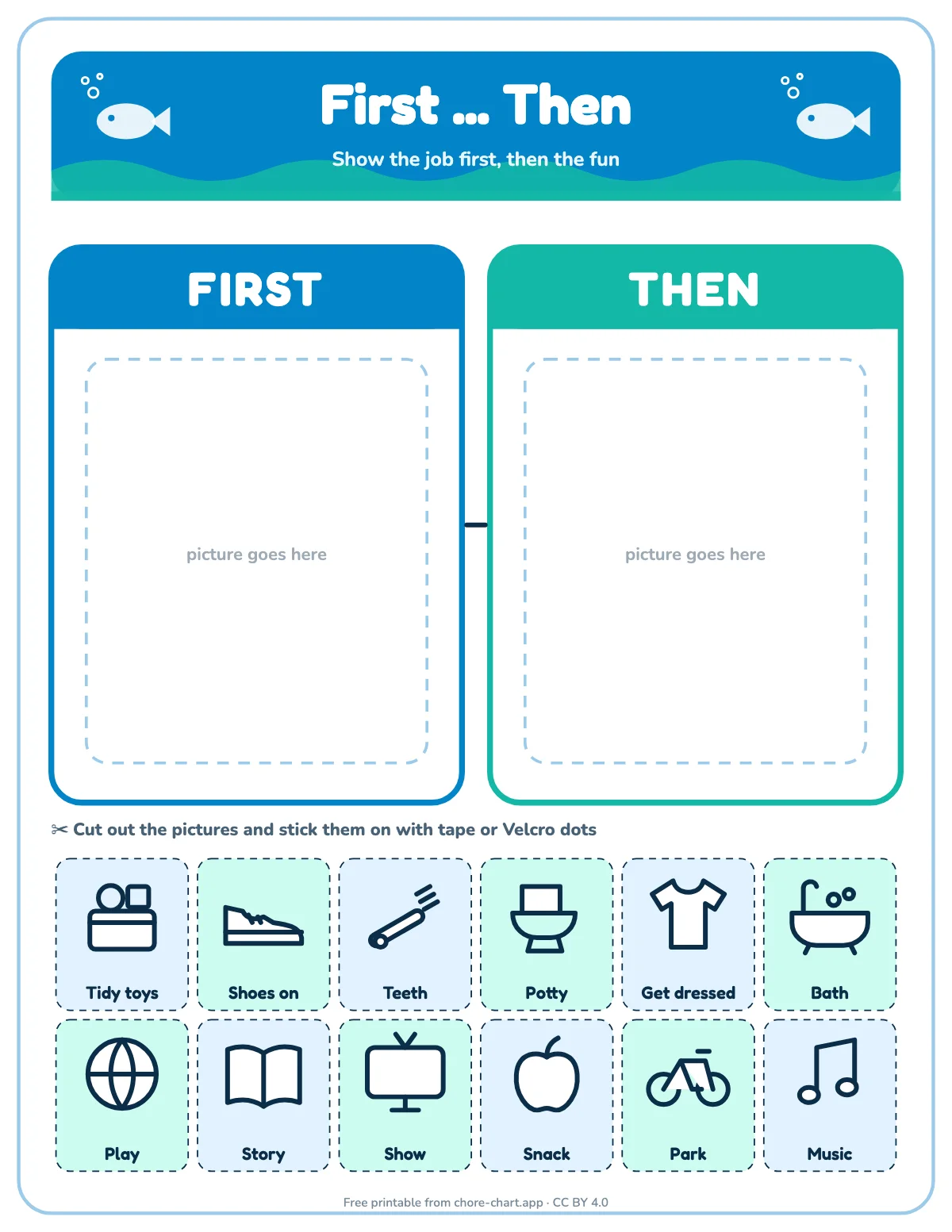
| First-then board | 2–5 | Show the job, then the fun thing that follows. No counting needed. |
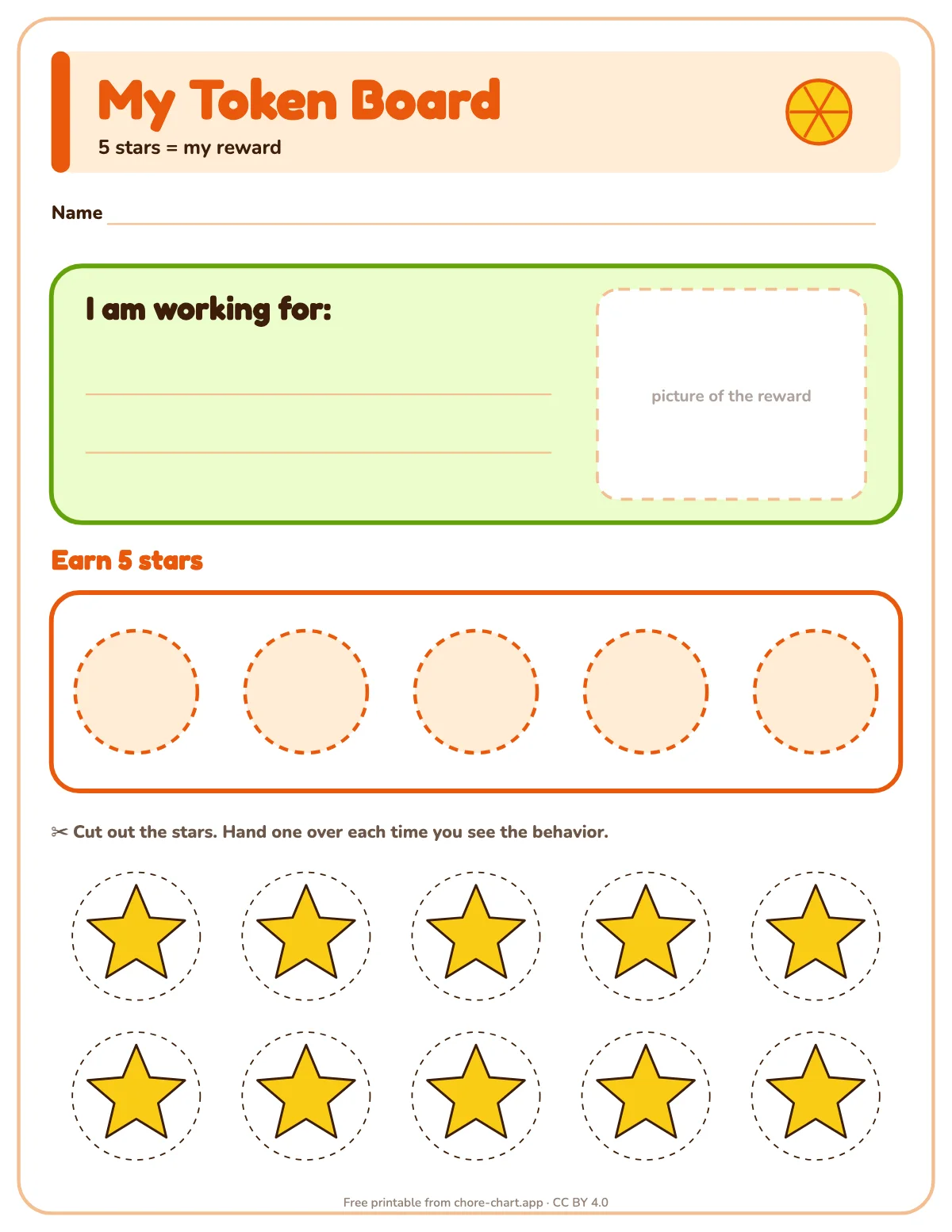
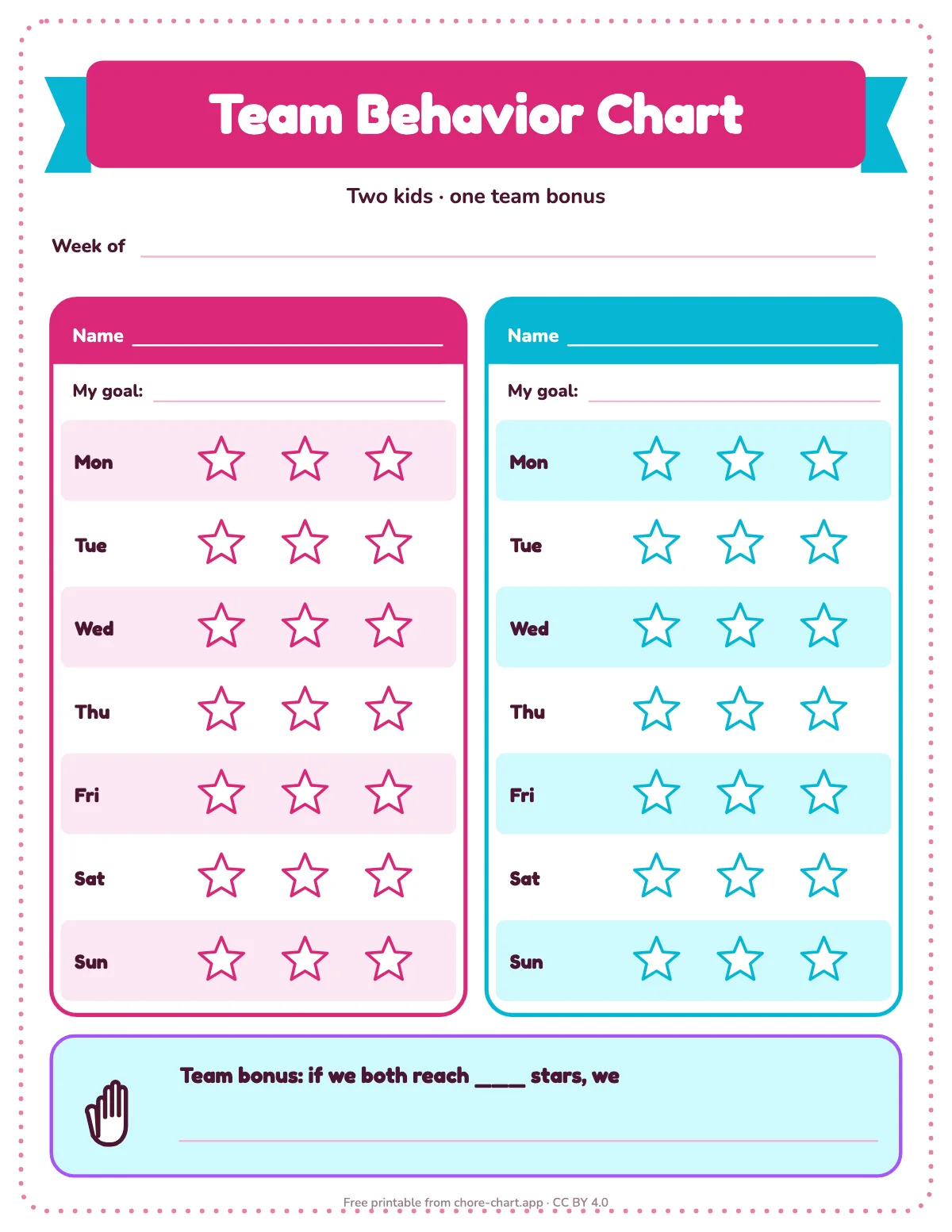
| Token board | 2–7 | Hand over a star each time you see the behavior; five stars and the reward happens. |
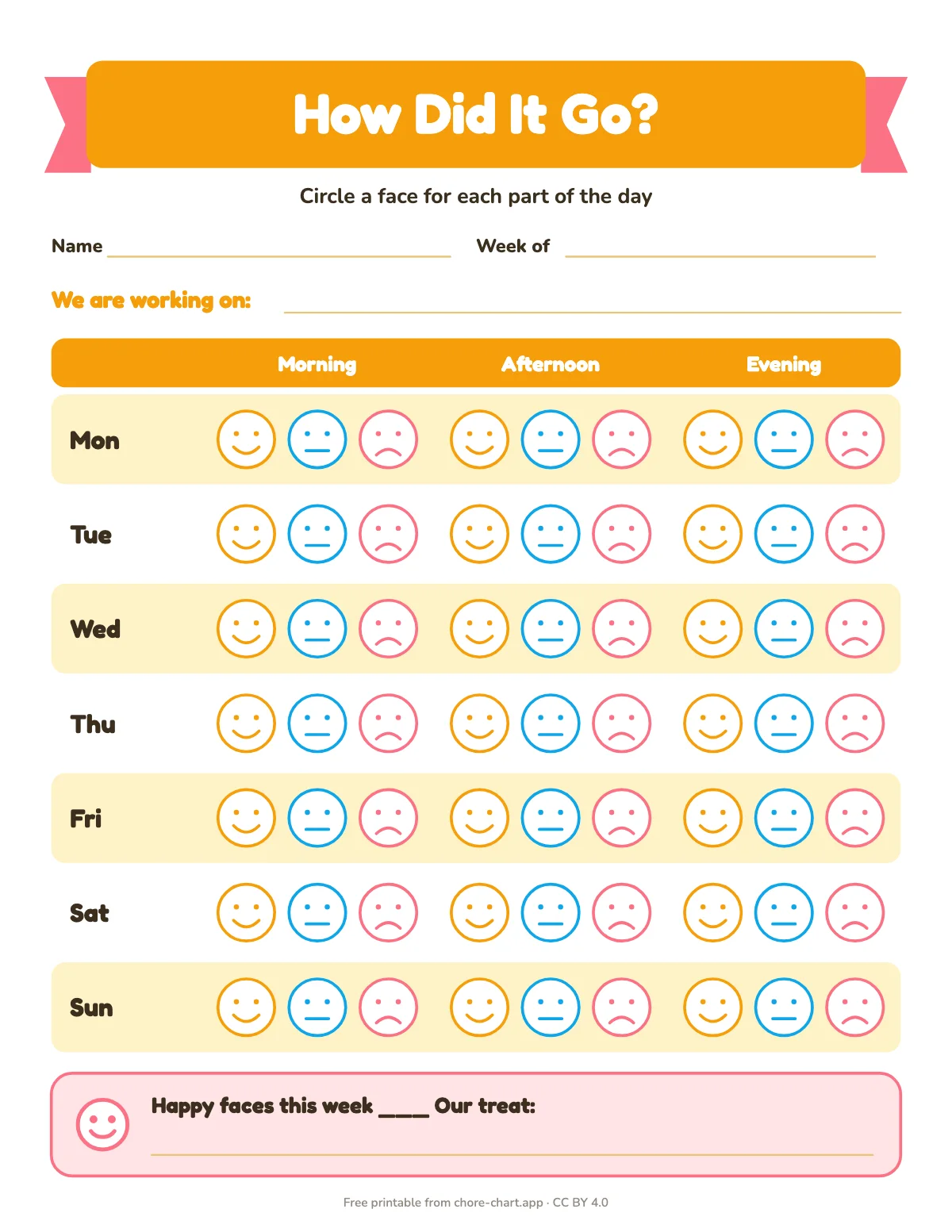
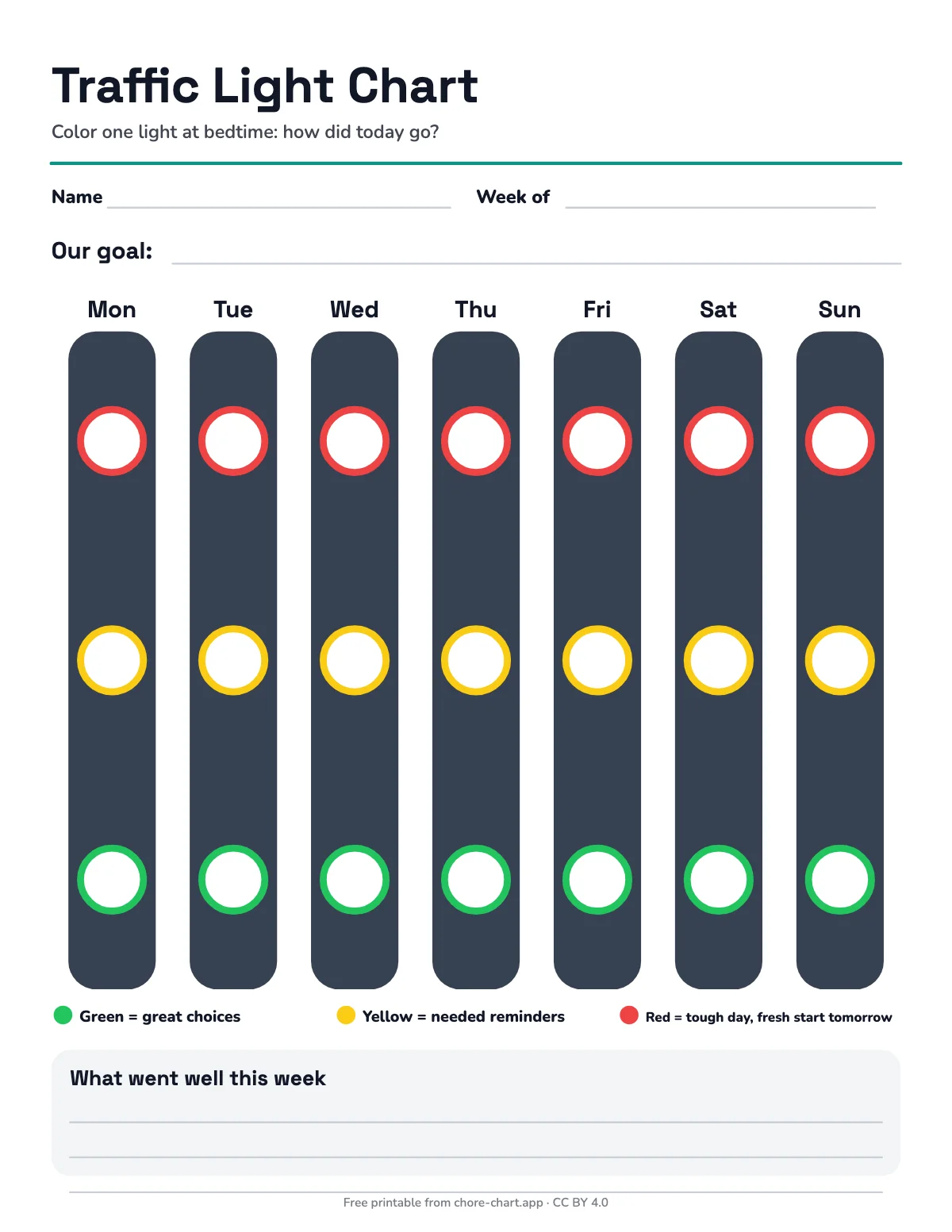
| Smiley faces, traffic light | 3–8 | Rate parts of the day together. Good for "how did it go" talks at bedtime. |
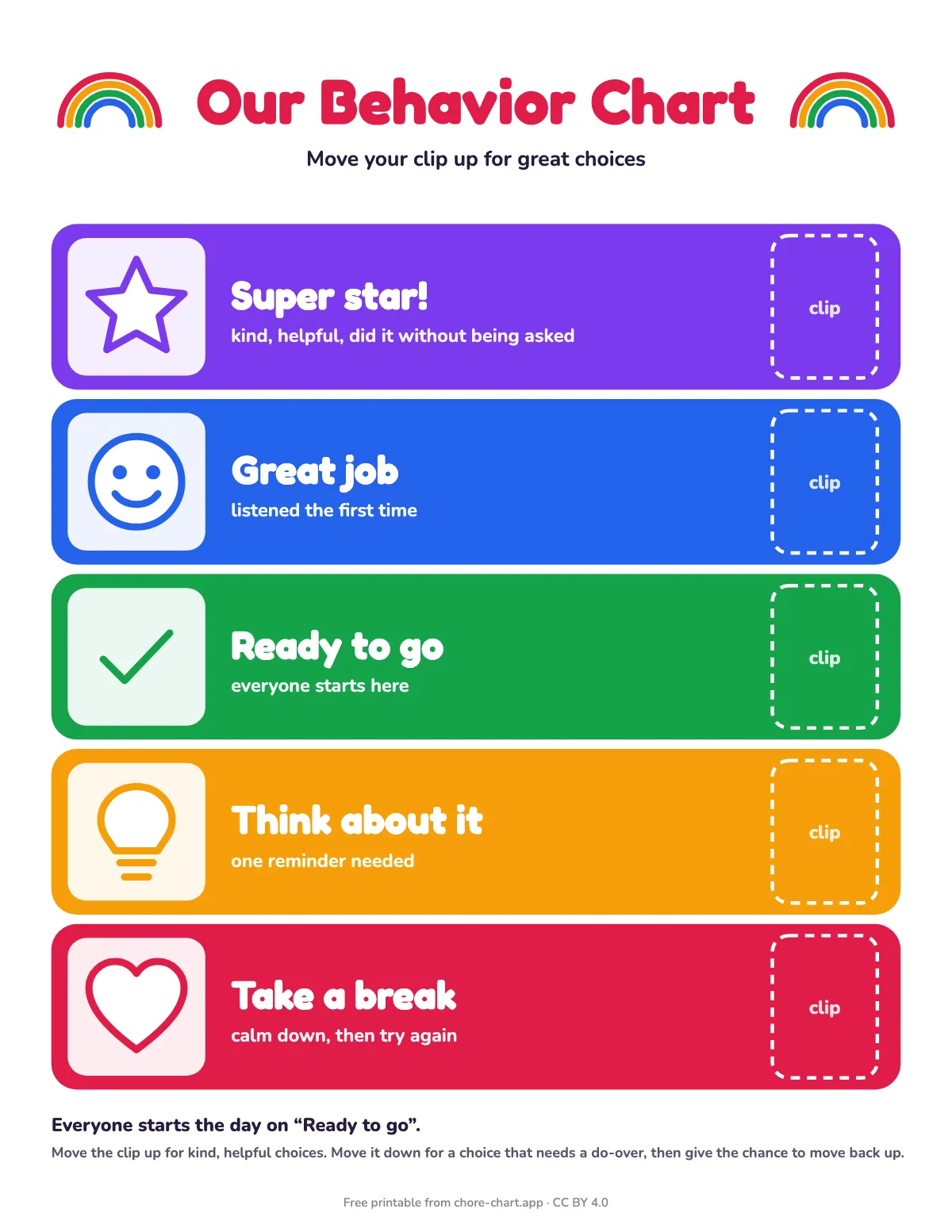
| Clip chart | 5–10 | A clothespin moves up and down five levels; everyone starts the day in the middle. |
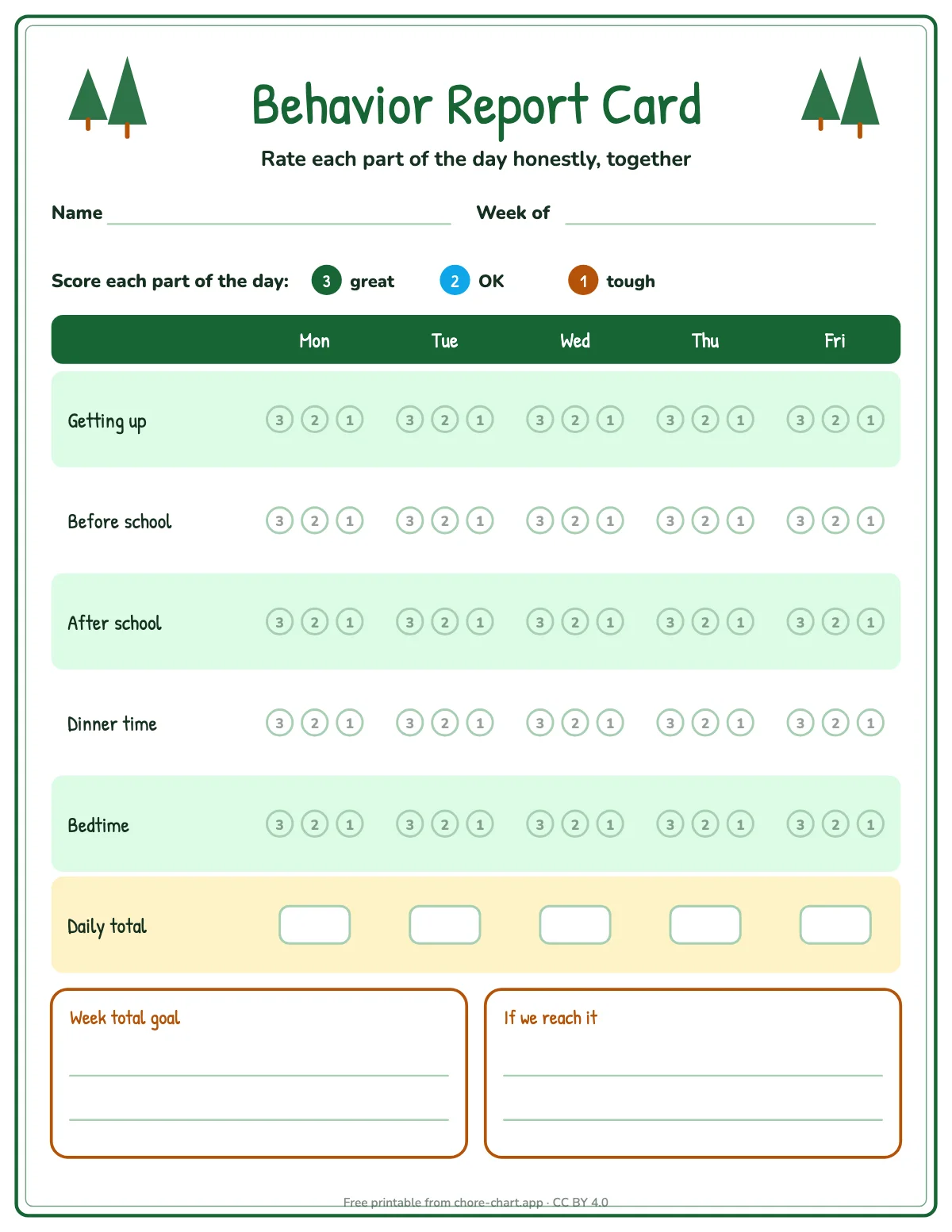
| Report card | 7–11 | Score five parts of the school day from 1 to 3, with a weekly target. |
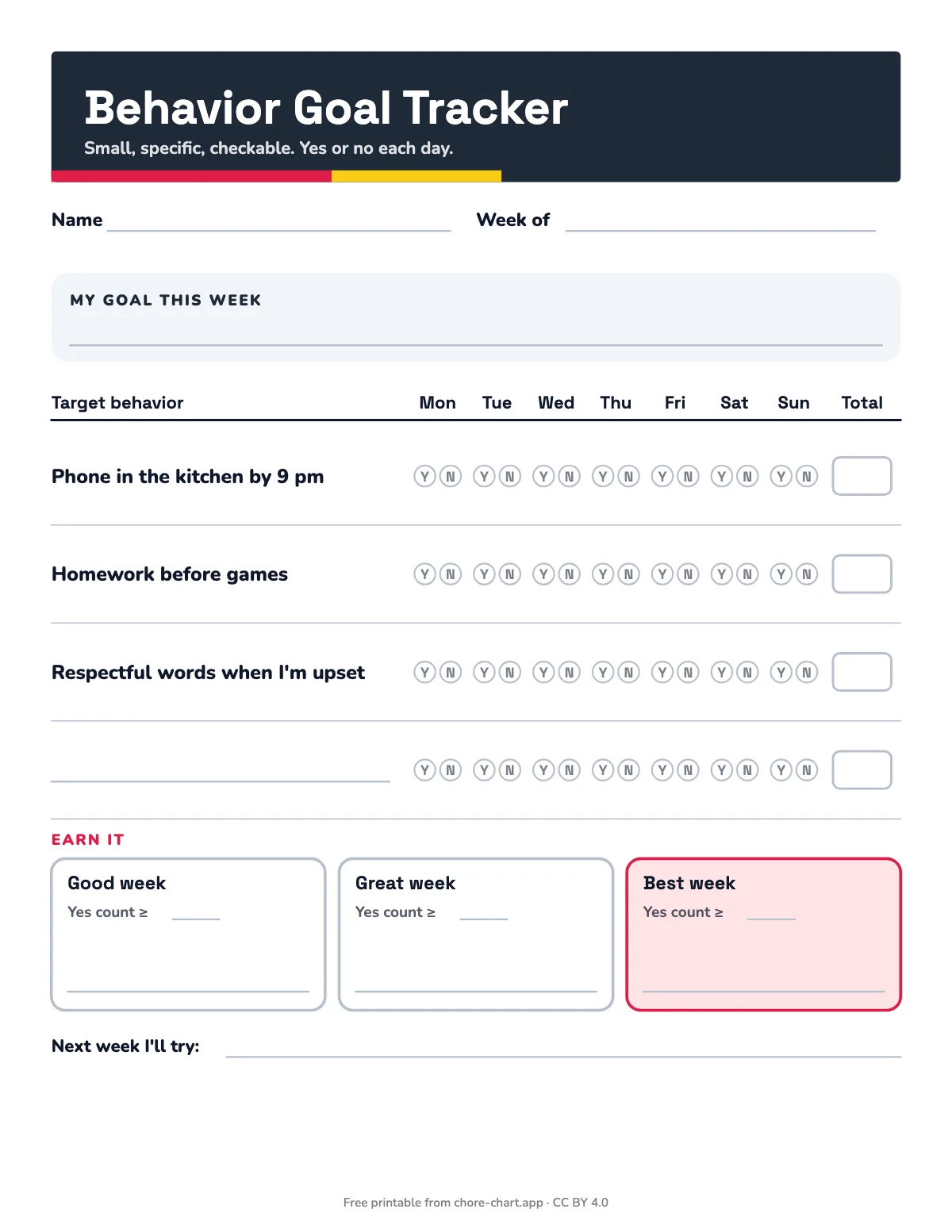
| Goal tracker | 10–14 | Two to four specific goals, yes or no each day, rewards agreed in advance. |
Write the goal so your child can picture it
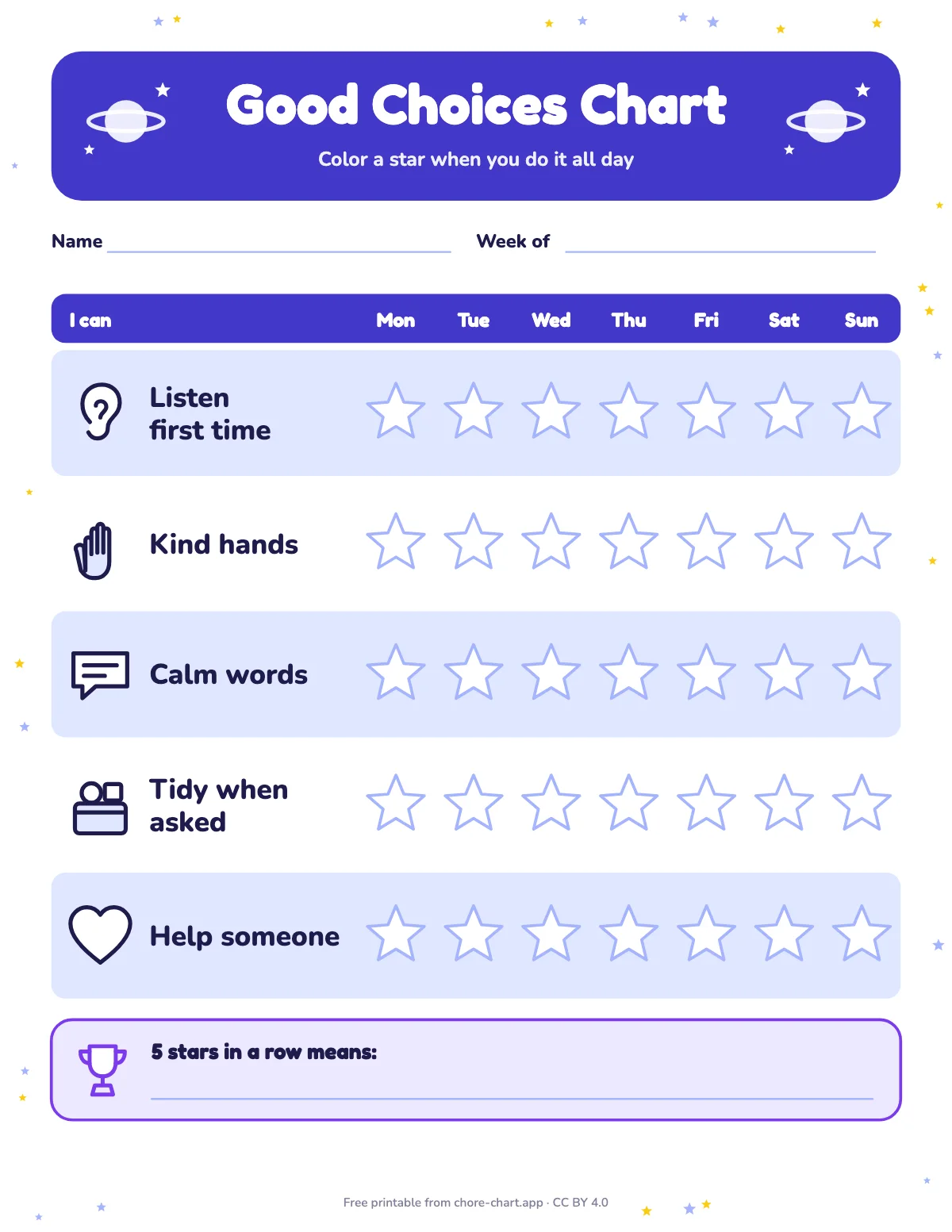
Describe what to do, not what to stop: "use calm words" instead of "no yelling", "hands to yourself" instead of "no hitting". Pick one to three goals, not ten. The American Academy of Pediatrics' advice on discipline puts it simply: catch them being good, and be specific when you praise ("you put that toy away the first time I asked").
Running it day to day
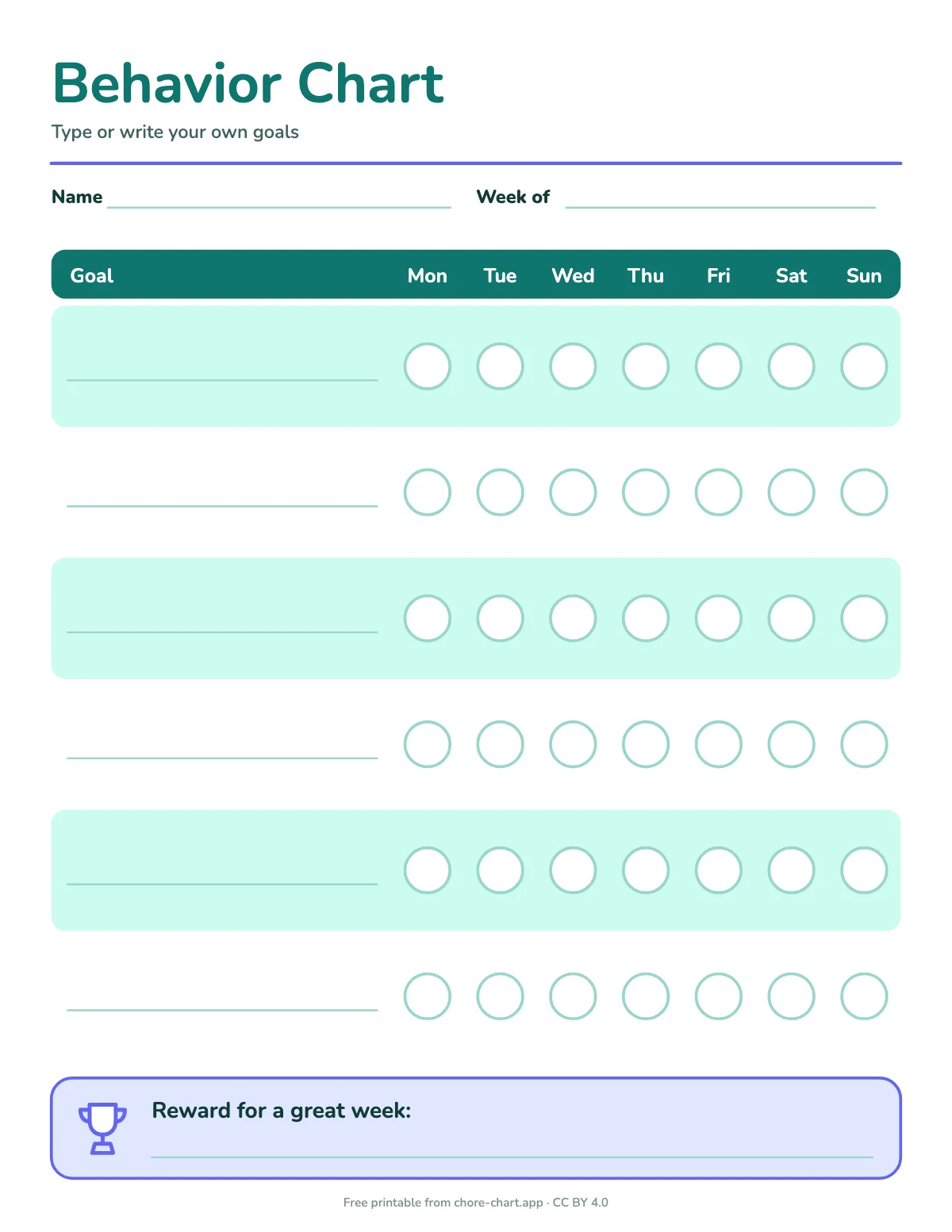
- Mark the chart right after the behavior, not at the end of the day.
- Stars, faces and tokens that were earned stay earned.
- Every day starts fresh. On the clip chart that means back to the middle each morning, and a child who moved down can always move back up.
- Keep it private and positive. Clip charts get criticized in classrooms because a move down is public. At home, keep it between you and your child, and never move a clip as a threat.
- Once a week, look at it together and ask what helped.
When a chart is not enough
Charts help with everyday habits. They are not a treatment. Talk to your pediatrician or family doctor if behavior is aggressive or unsafe, if it lasts for weeks even with steady routines, if it changes suddenly, or if school or child care raise concerns. A doctor can rule out sleep, hearing or other problems and refer you to a specialist if needed.
Questions
Behavior chart or chore chart: what's the difference?
A chore chart tracks jobs that get done. A behavior chart tracks how your child acts, like listening or calm words. Many families use one of each.
How long should we use a behavior chart?
Until the behavior is steady for two or three weeks. Then praise it without the chart and choose the next goal, or retire the chart.
Should I take stars away for bad behavior?
No. Removing earned rewards tends to make the chart a punishment. Use a separate, calm consequence and keep the chart for what went right.