Five rules that make a reward chart work
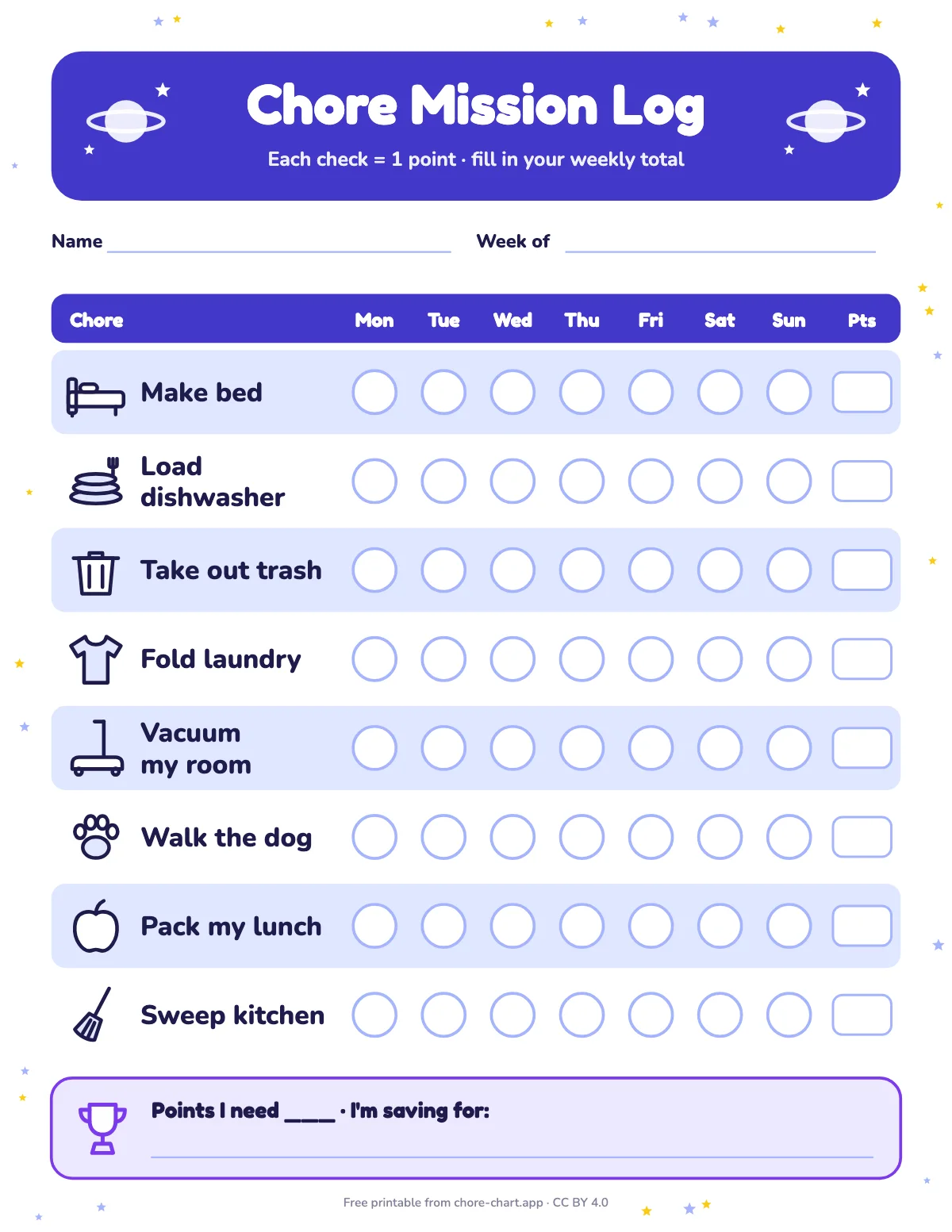
- Name the behavior exactly. "Make your bed before breakfast" can be checked; "be helpful" can't. Write it on the chart in your child's words.
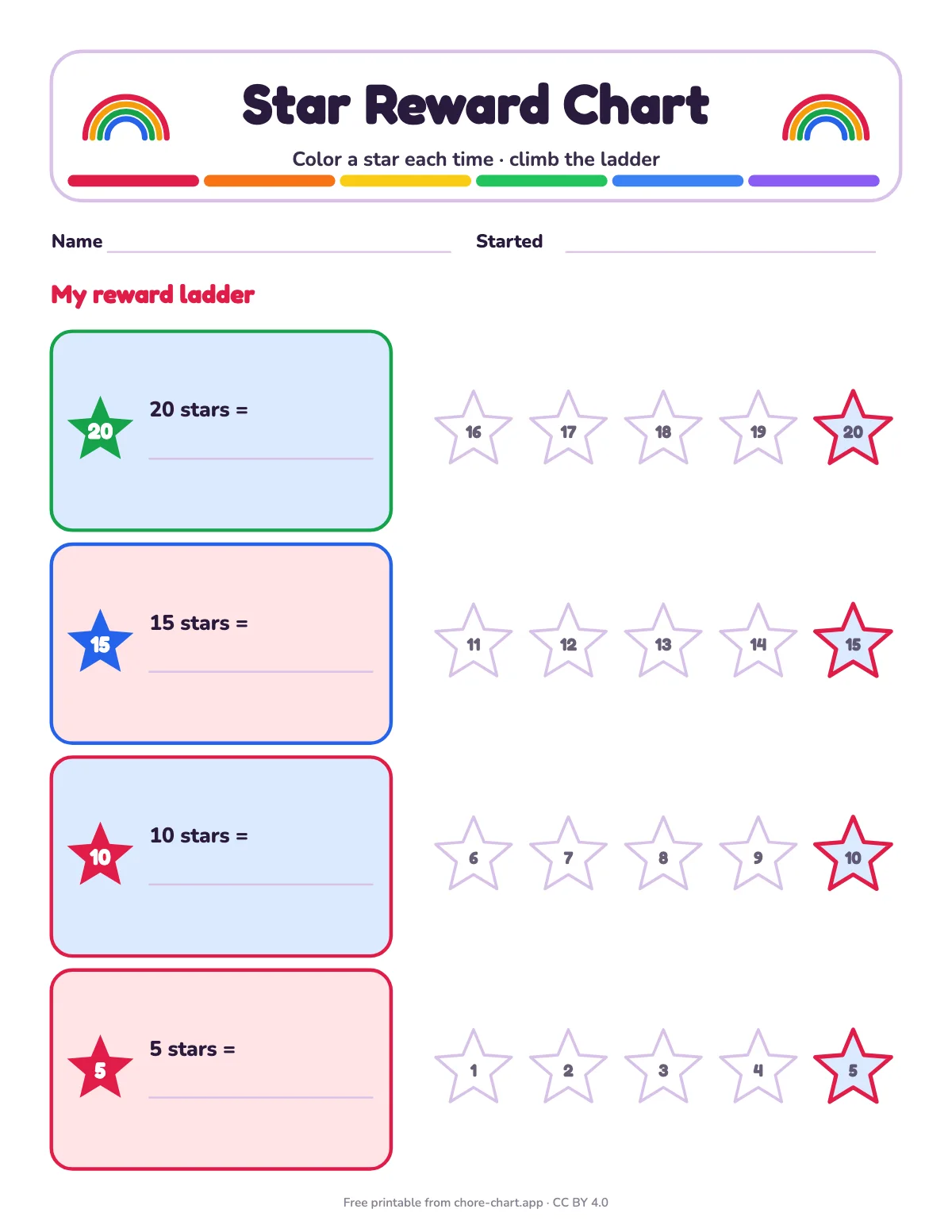
- Make the first reward close. For children under 7, aim for the first reward within two or three days. That's why the star ladder starts paying out at 5 stars, not 20.
- Earned is earned. Never take stars or stickers away for misbehavior. If you need limits too, use a separate behavior chart.
- Mark it straight away. A star given right after the job, with a few words of specific praise, does more than a pile of stars at bedtime.
- Plan the exit. Once a job has been steady for a few weeks, move it off the chart and put a new one on, or stretch the gap between rewards.
Rewards that cost nothing
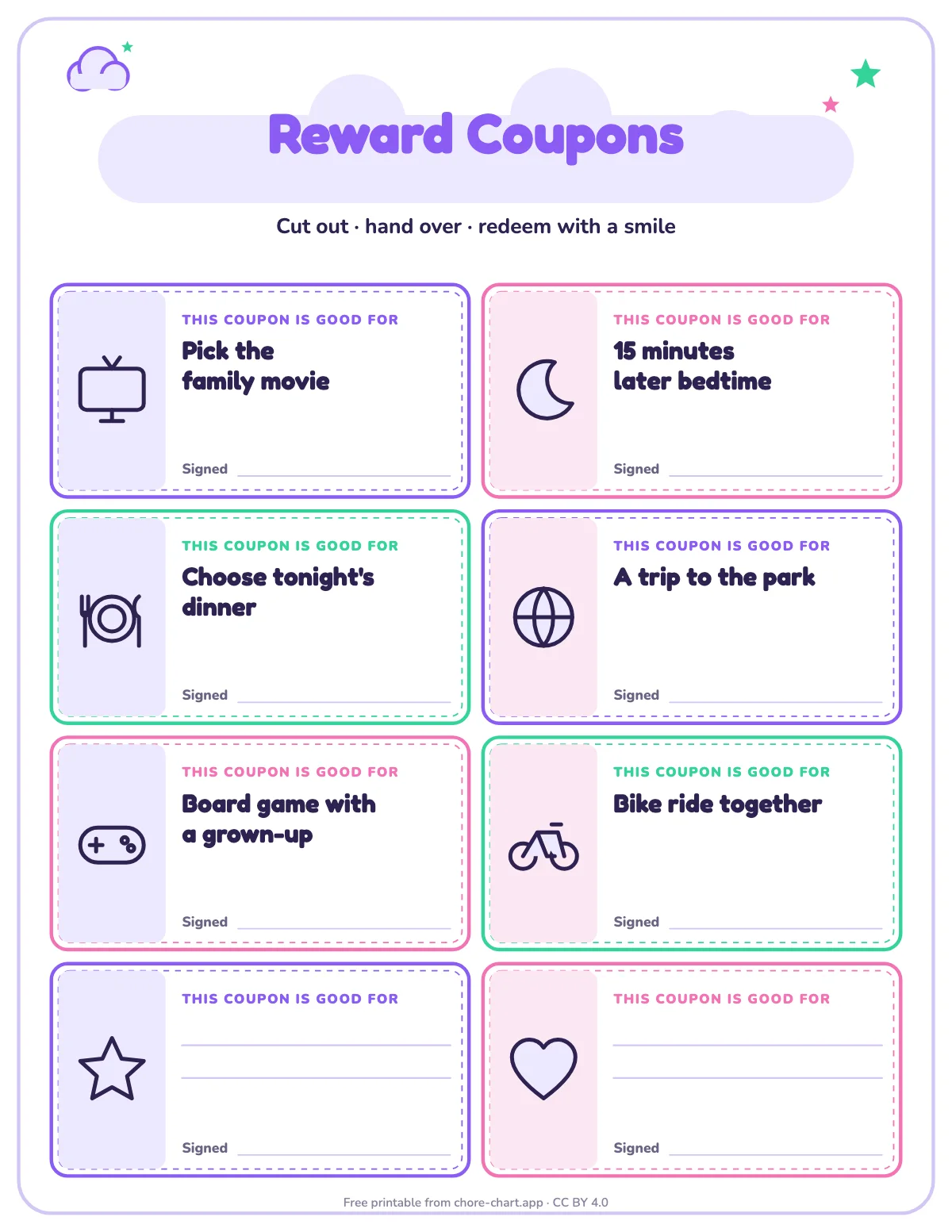
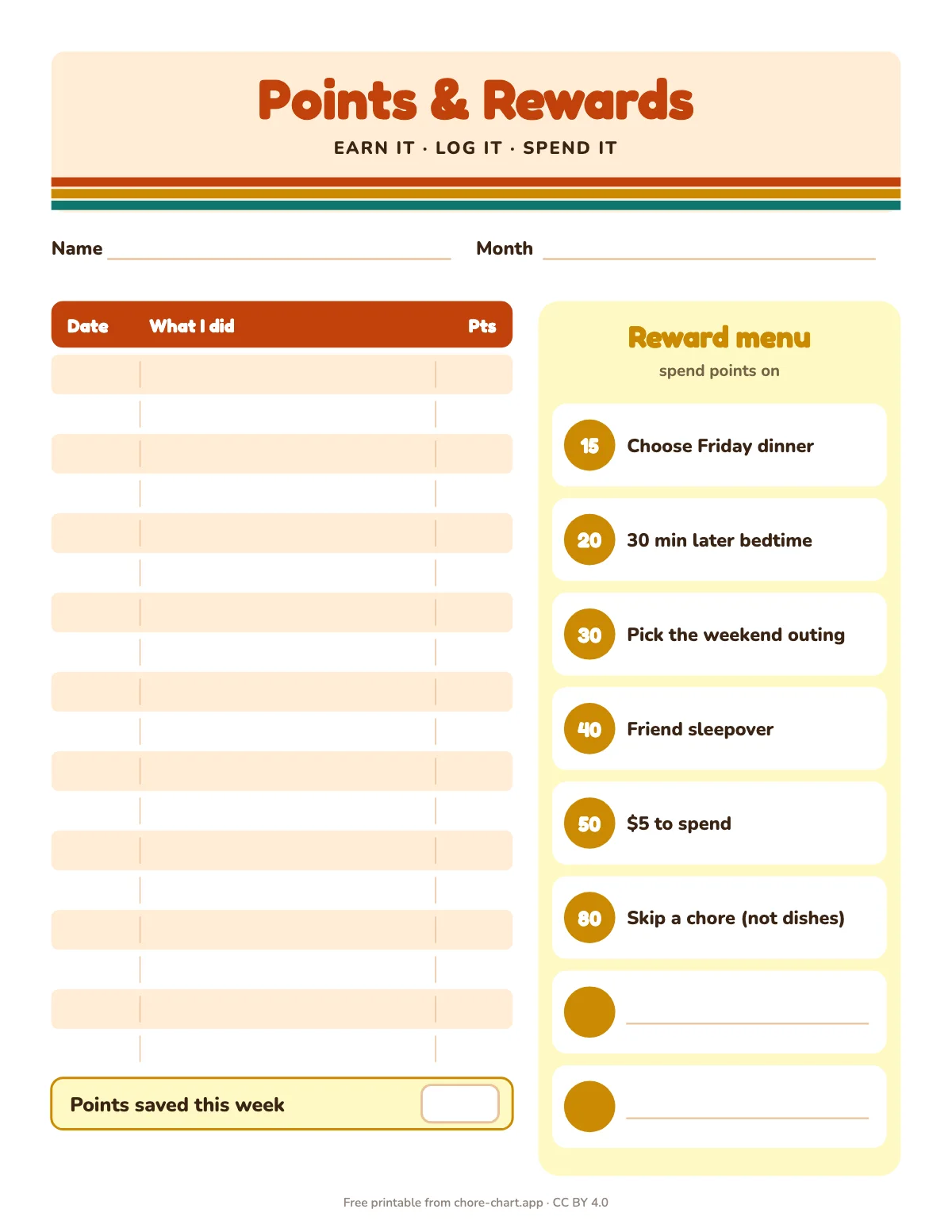
The best rewards are time and choice, not things. The printable coupons already include six of these, plus two blanks:
- Pick the family movie
- 15 minutes later bedtime
- Choose tonight's dinner
- A trip to the park
- Board game with a grown-up
- Bike ride together
- Friend over for the afternoon
- Skip-one-chore pass
Which reward chart for which age
| Age | Best format | Why |
|---|---|---|
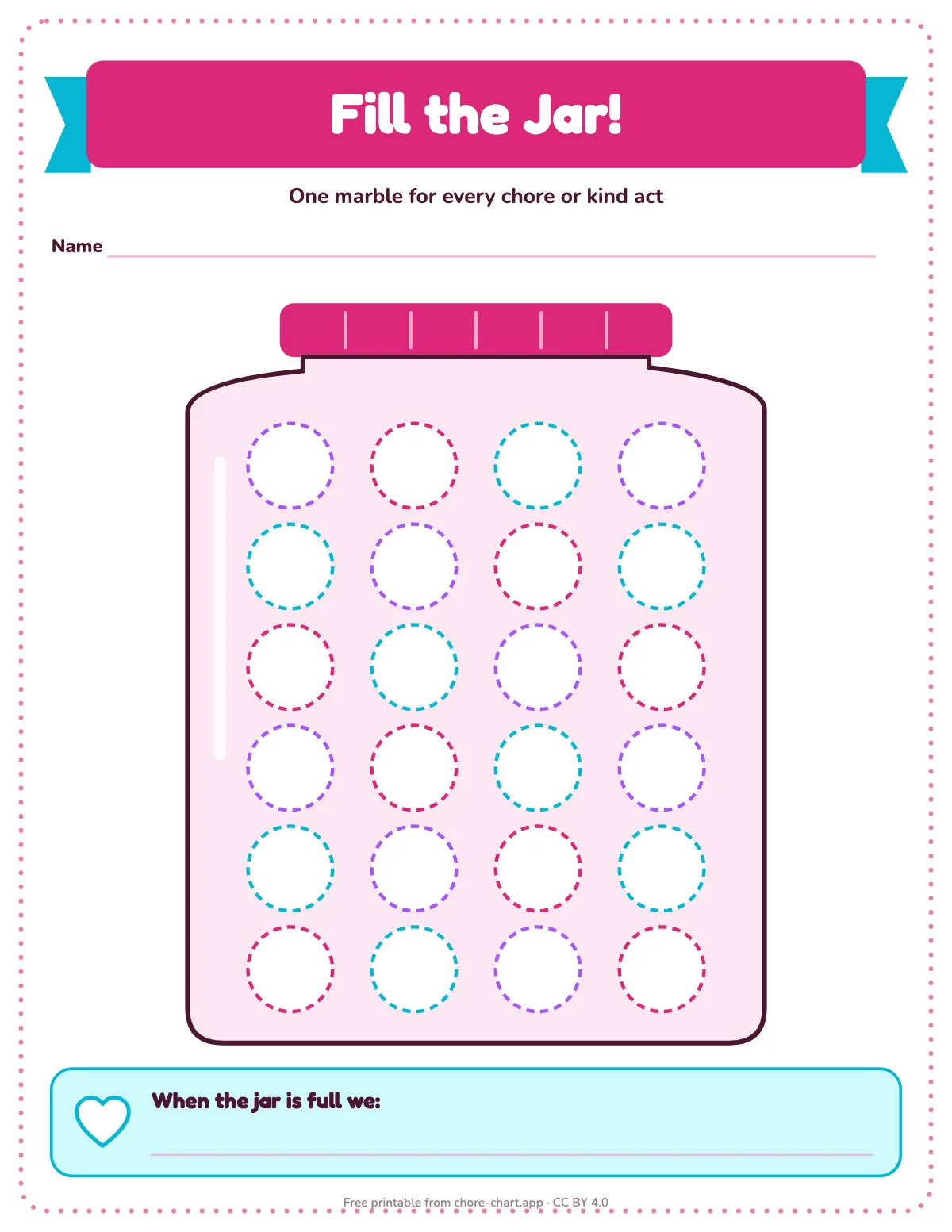
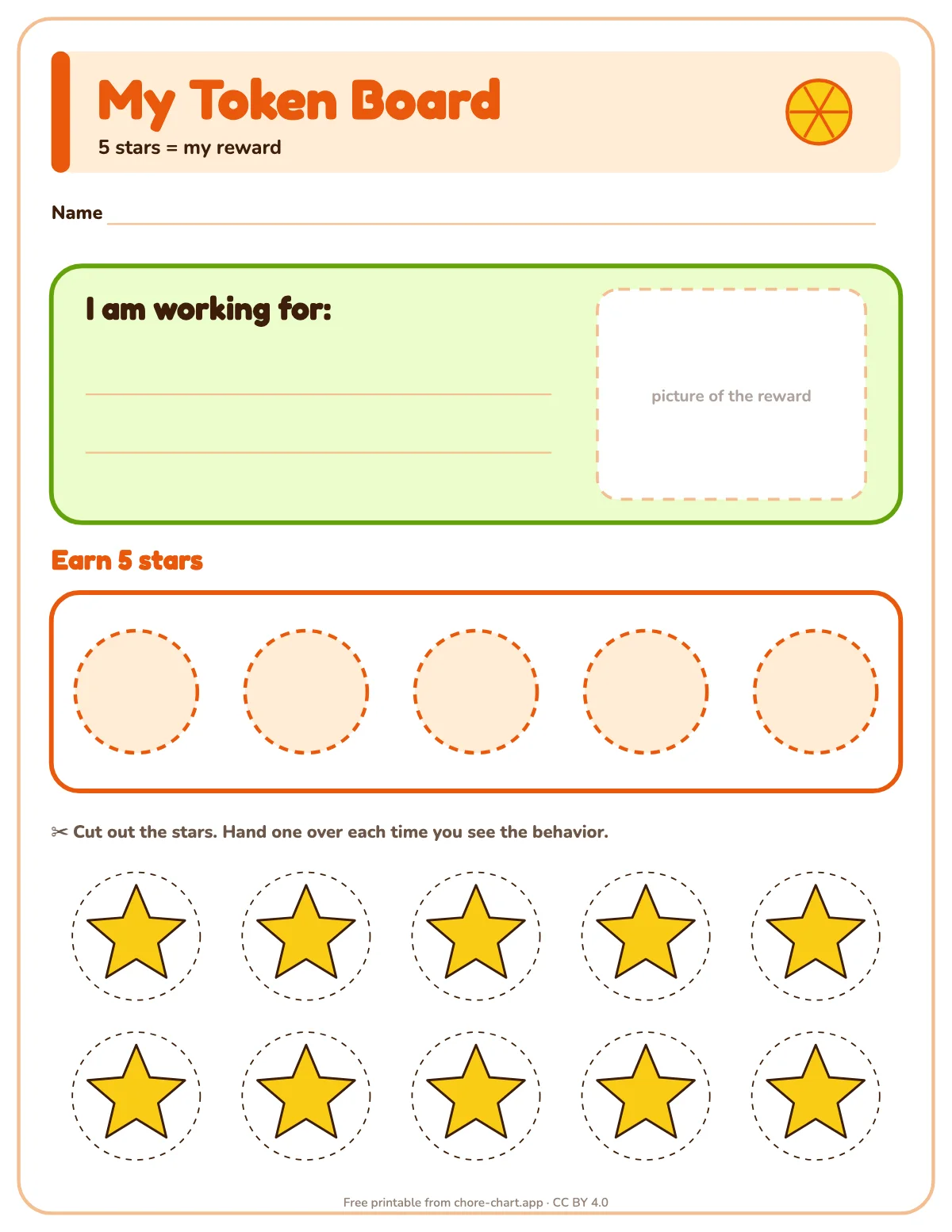
| 2–5 | Token board, reward jar | Five tokens or a jar they can see filling up: the goal is visible at a glance |
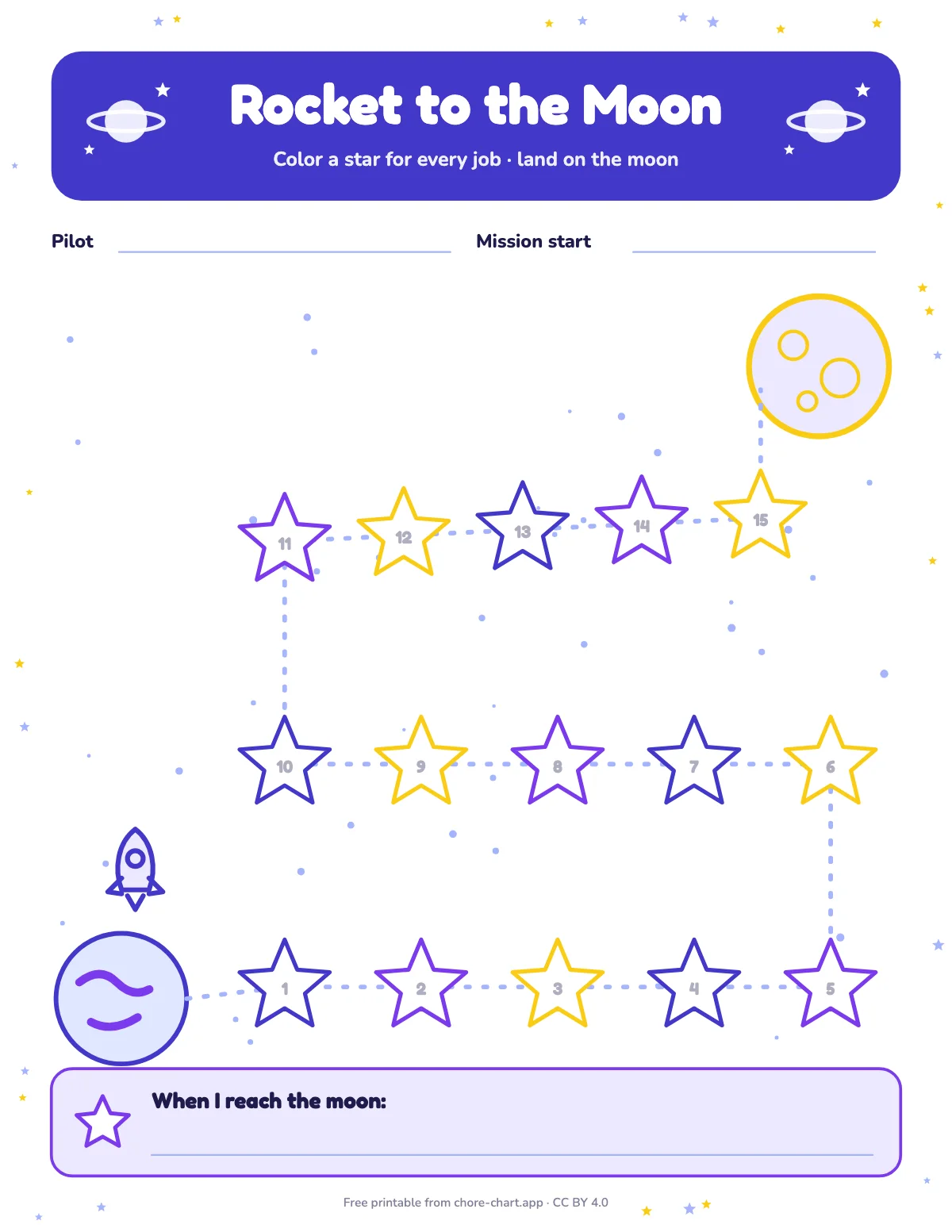
| 5–8 | Star ladder, rocket chart, coupons | Small rewards on the way to a bigger one keep the chart alive past week one |
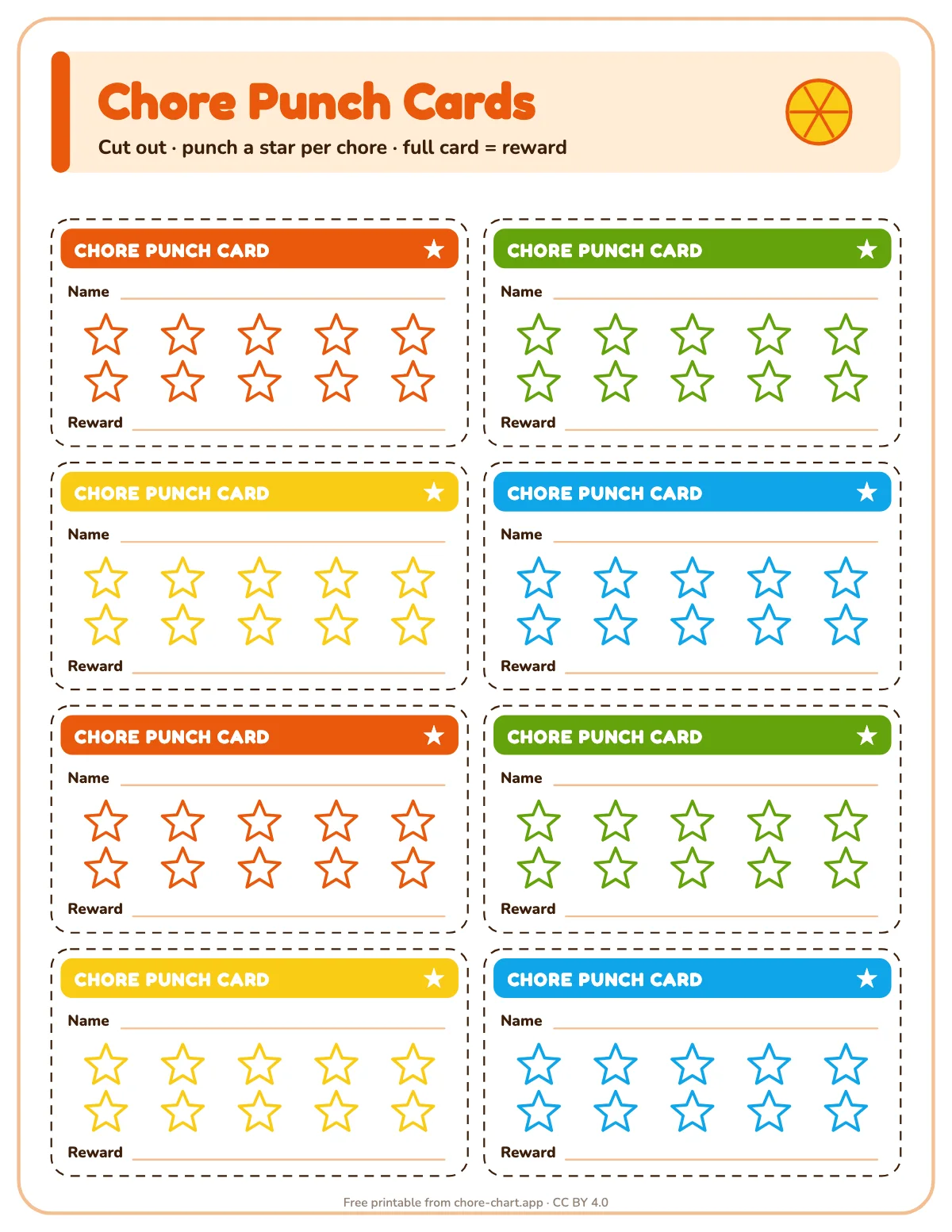
| 8–12 | Punch cards, points menu | They can save points or spend them now; choosing is part of the reward |
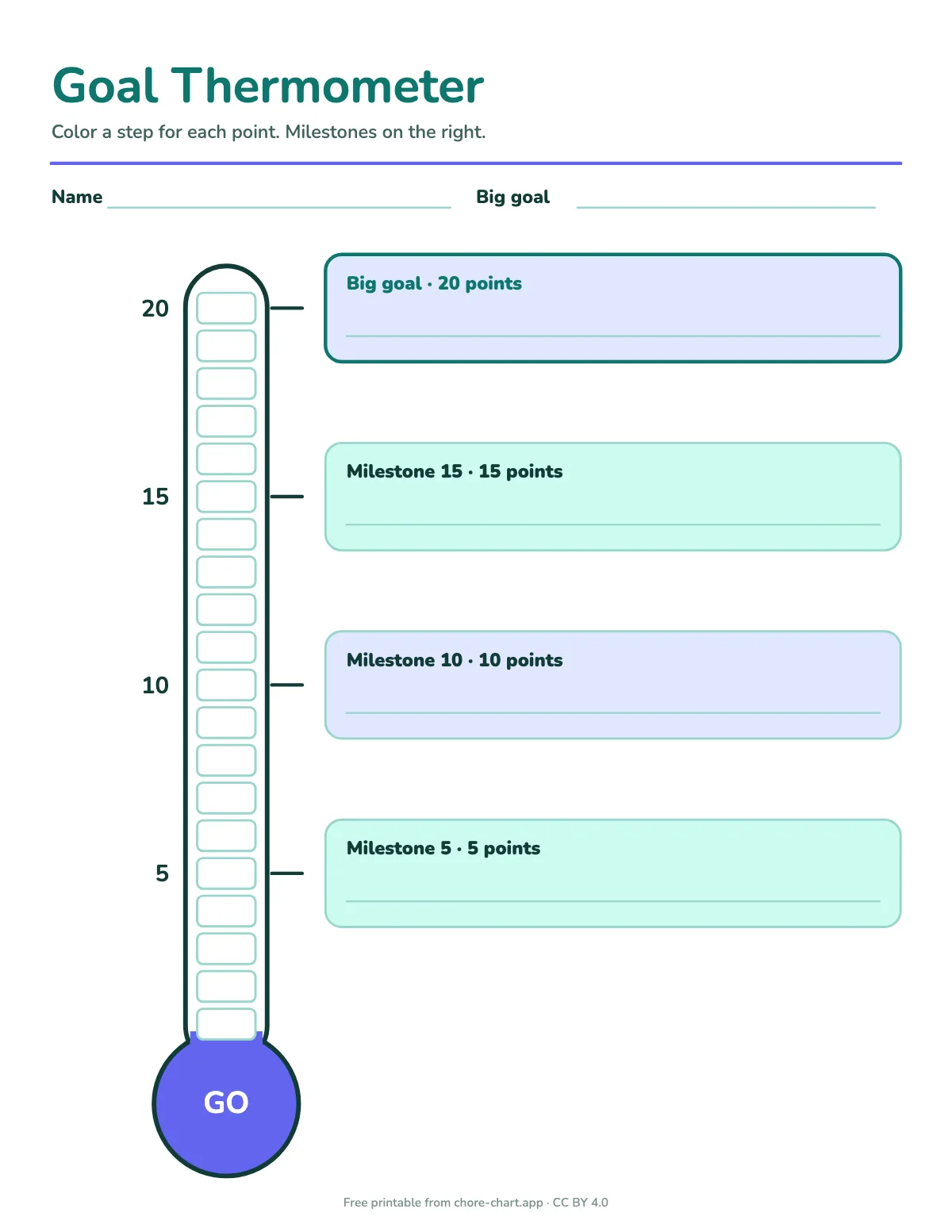
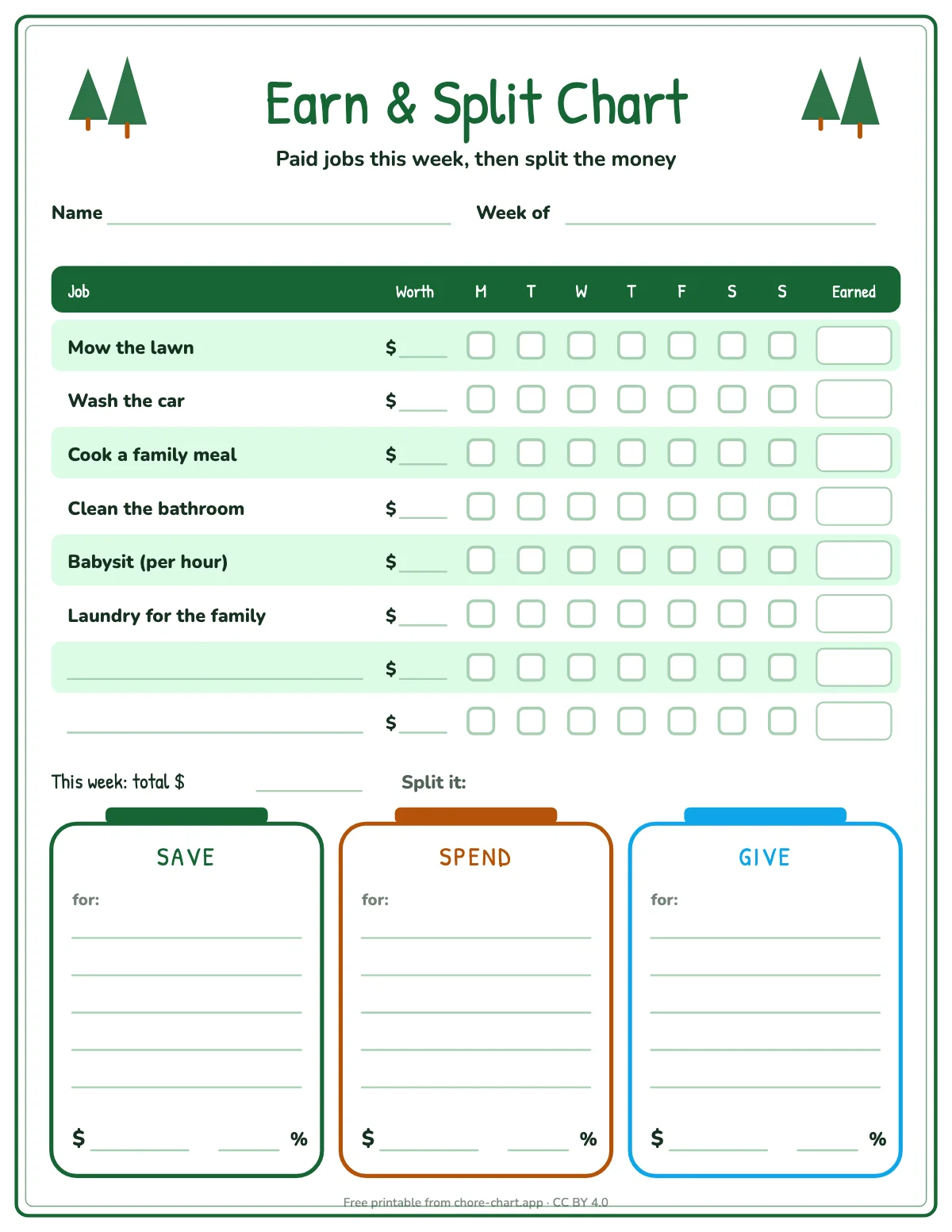
| 12+ | Goal thermometer, allowance chart | A long goal, or money they manage themselves |
Money as a reward
The allowance chart puts a dollar value on extra jobs and splits the week's total into save, spend and give. Whether to pay for chores at all is a real family decision. Family Checklist lays out the case for and against paying kids for chores, if you want to think it through before you print.
Questions
What's the difference between a reward chart and a sticker chart?
A sticker chart counts up to one goal. A reward chart has several steps or a menu, so the child chooses or earns rewards along the way.
How long should one reward chart last?
One goal per chart. Most designs here fill in one to four weeks of normal use; the 20-step thermometer can run longer.
What if my child loses interest after a week?
Shorten the distance to the first reward, let your child pick the next design, or change the reward. Interest usually drops when the goal feels too far away.