Home › Printable chore charts › By age
Chore charts by age, from toddlers to teens
The right chart changes faster than the chores do. A three-year-old needs pictures and a reward this week; a teenager needs a deadline and a say in the deal. Here are 16 free printable charts grouped by age, with what goes on each one and why that format suits that age.
Jump to: 2–4 · 5–7 · 8–10 · 11–13 · Teens
Ages 2–4: pictures, not words
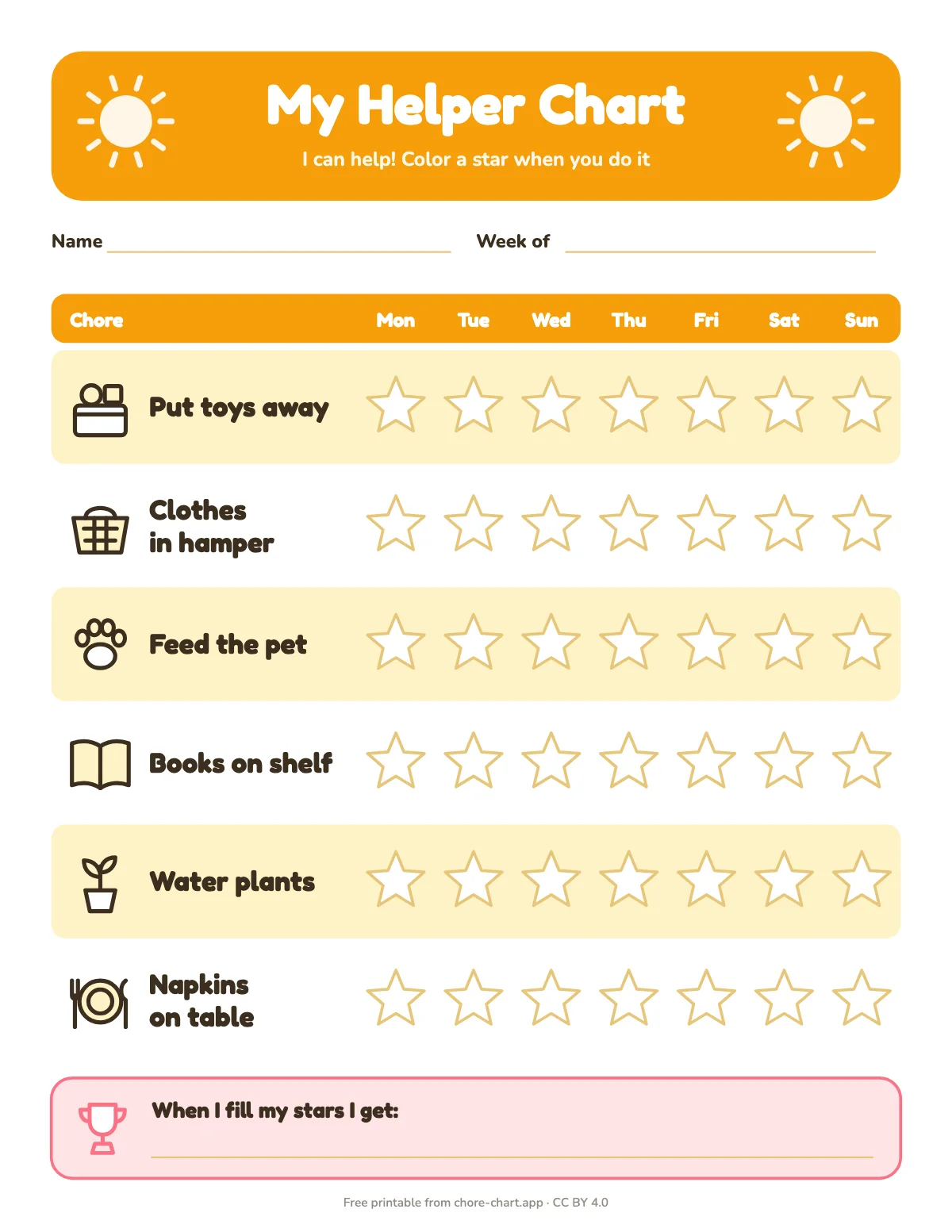
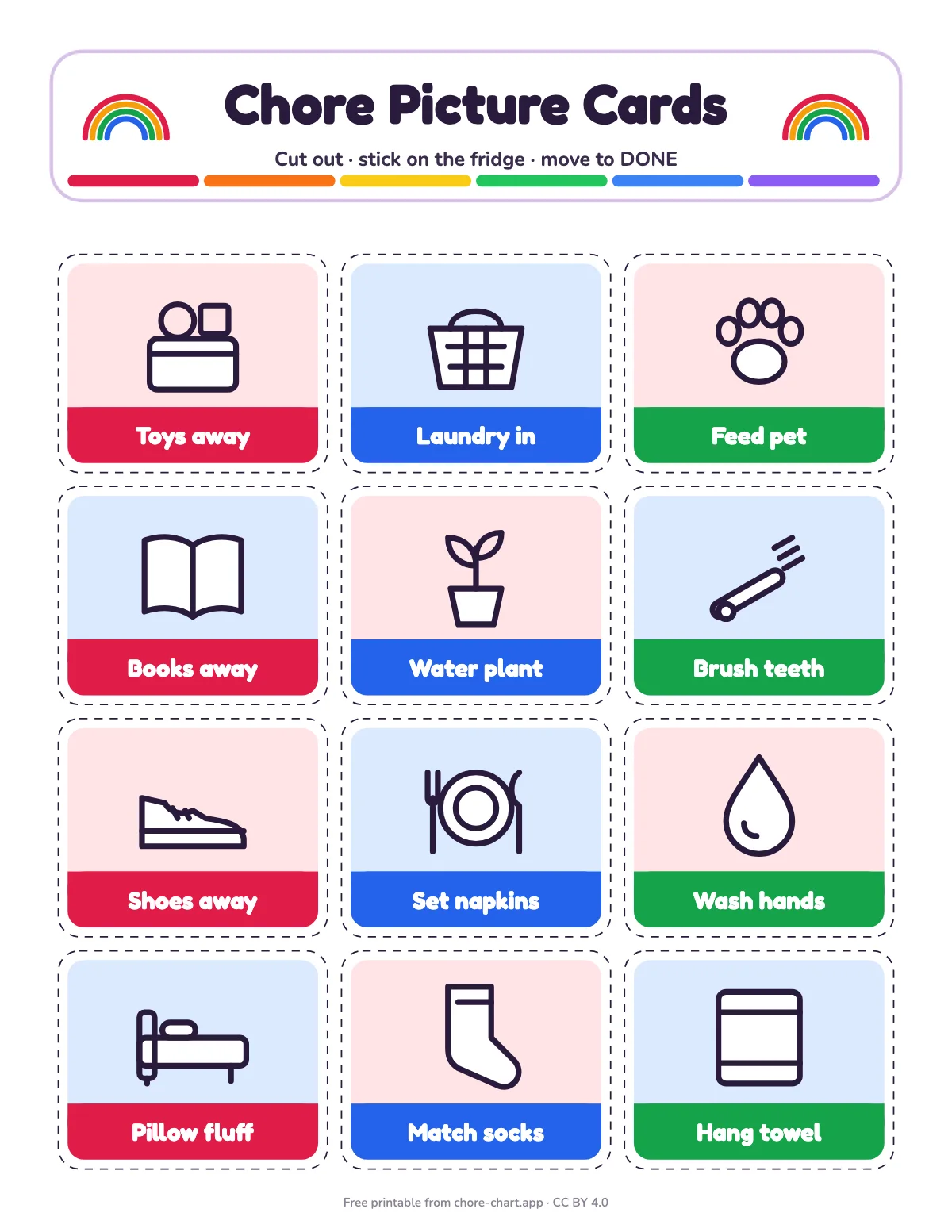
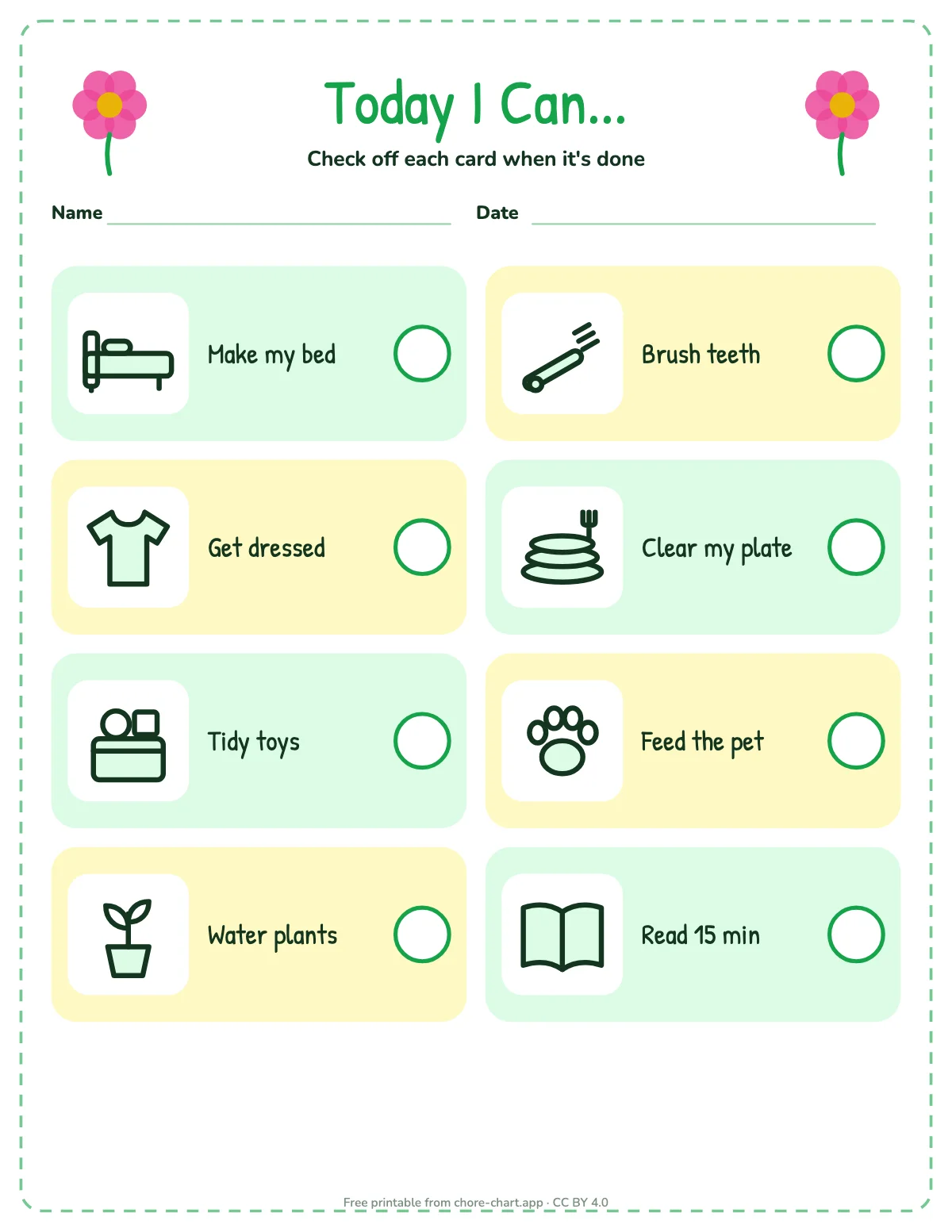
Pre-readers follow pictures, so every job here has an icon a toddler recognizes. For preschoolers, the American Academy of Pediatrics suggests starting age-appropriate chores like putting toys away, with simple, step-by-step directions and praise. Color the star right after the job: a toddler won't connect a sticker at bedtime with something done at breakfast.
Ages 5–7: one check per job, every day
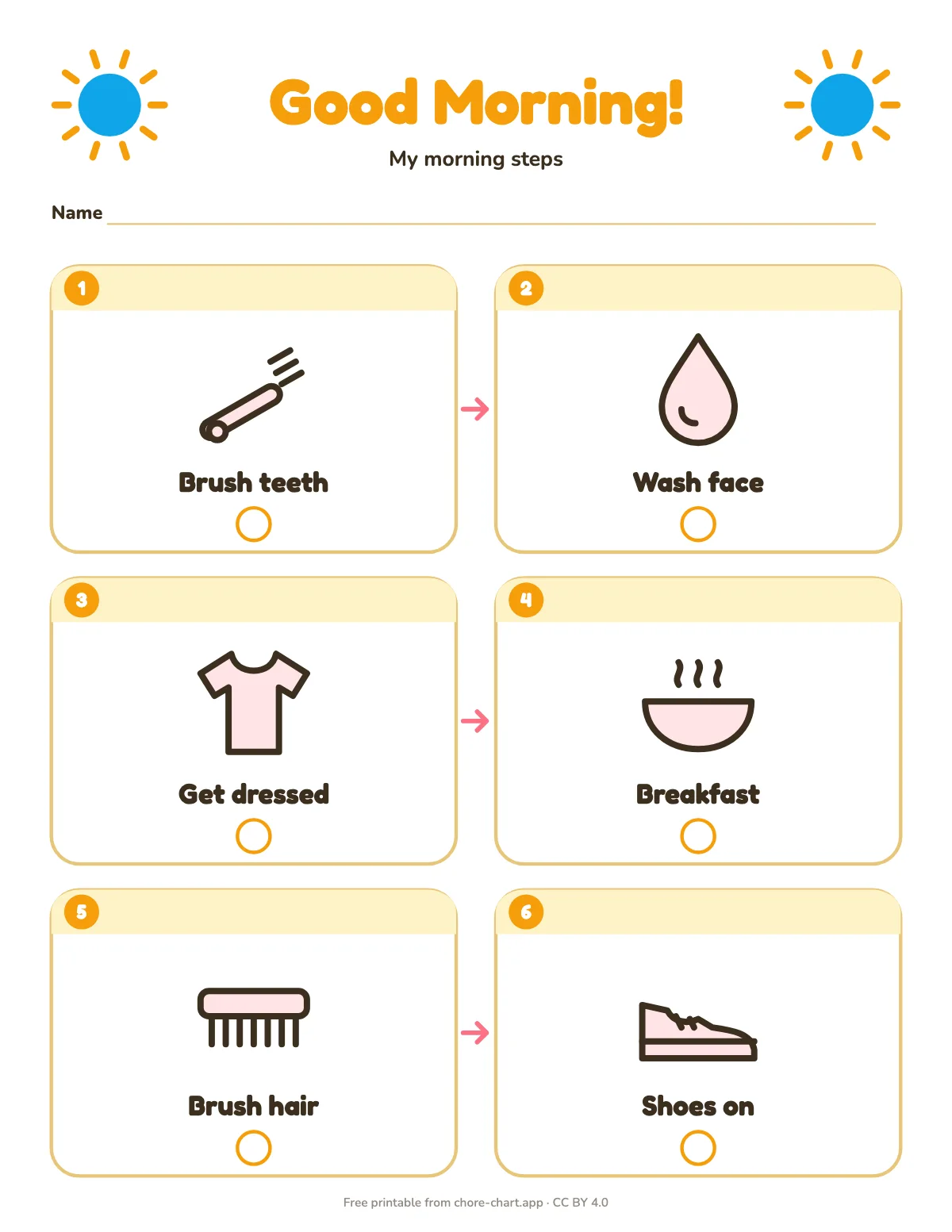
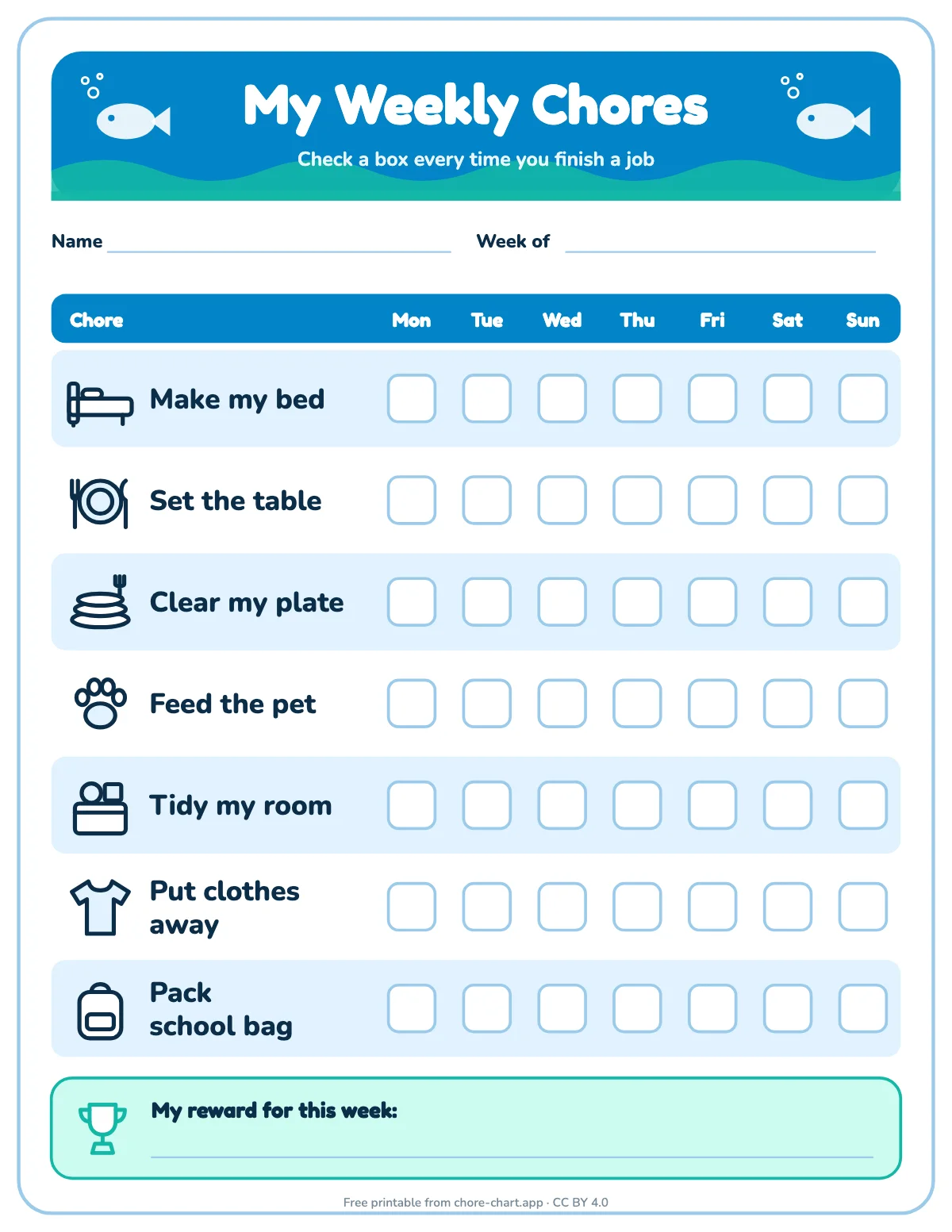
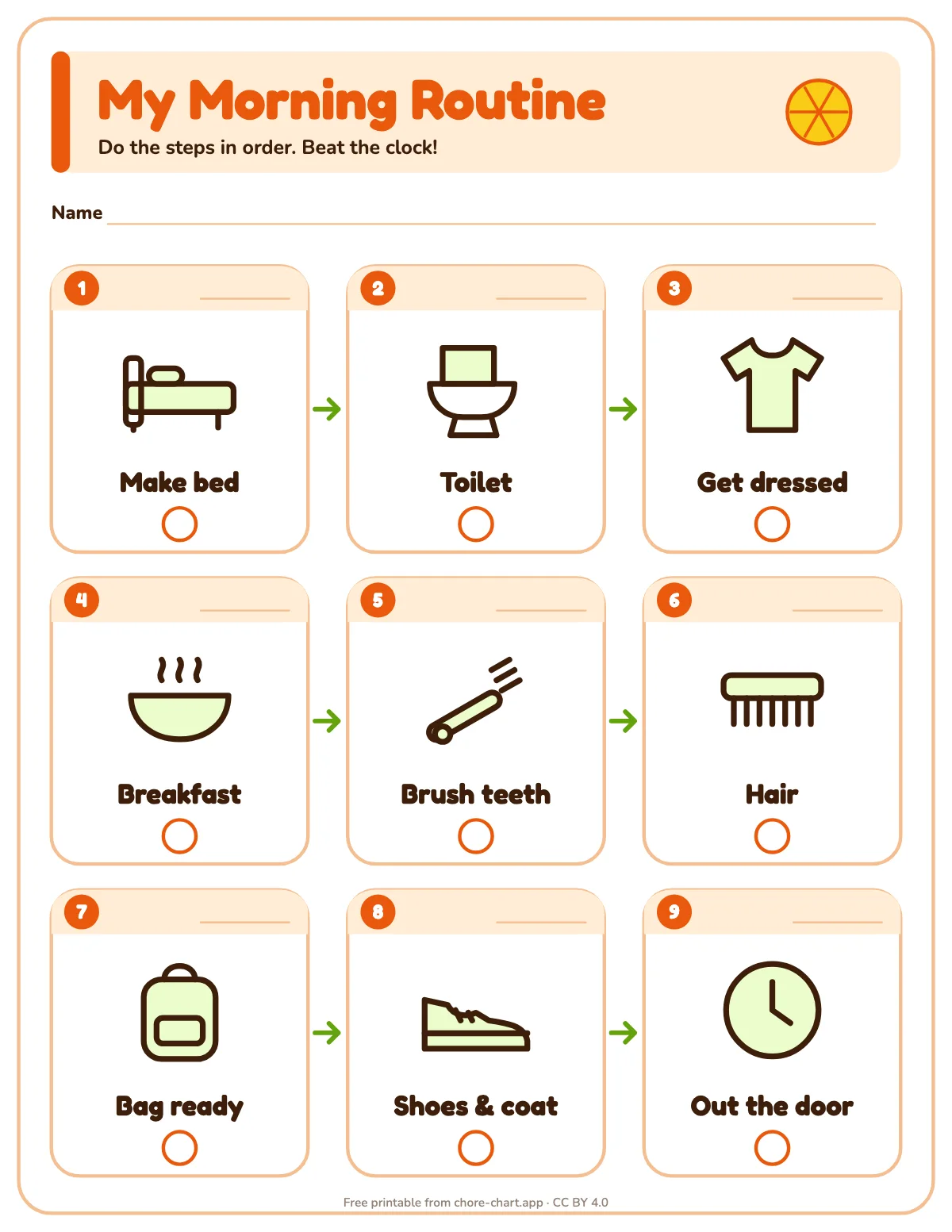
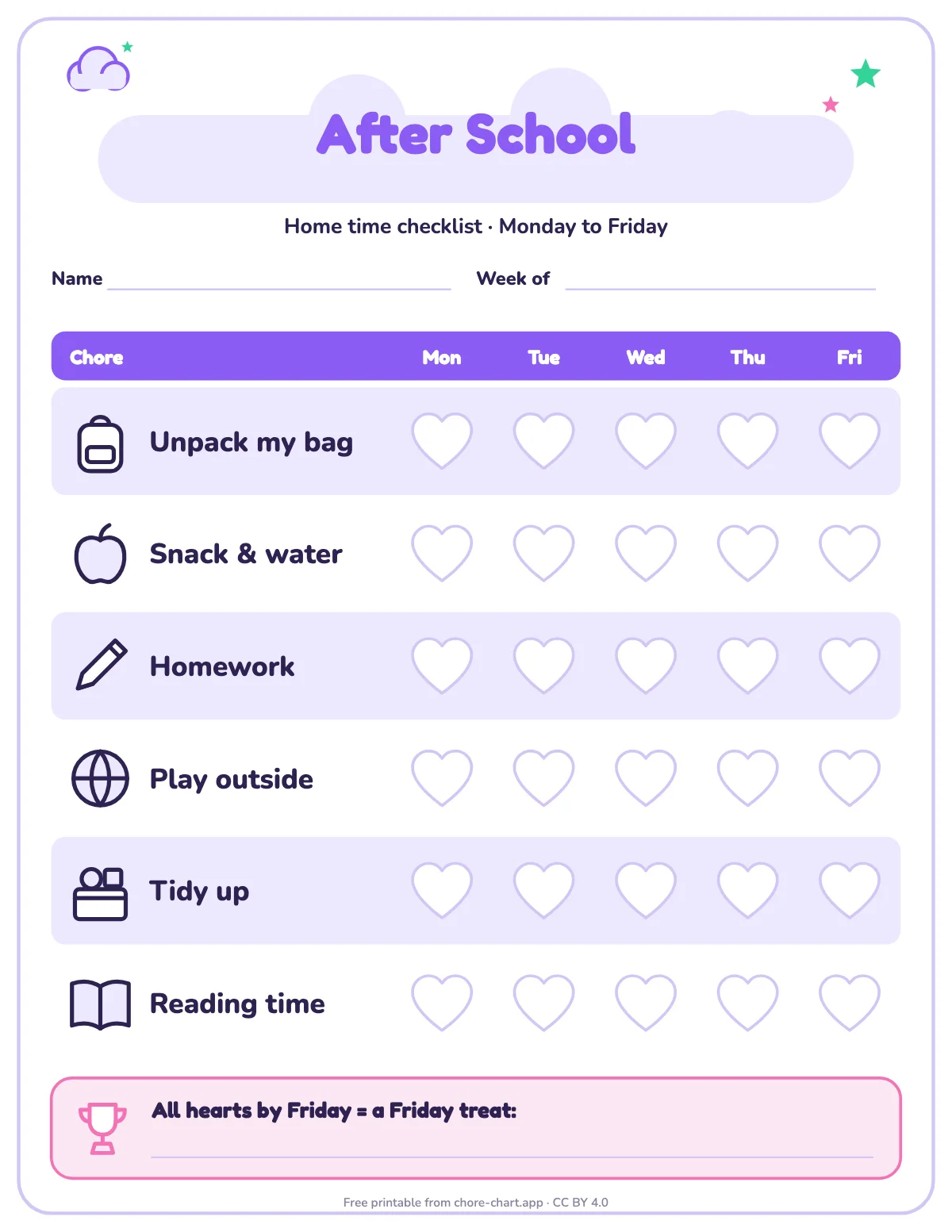
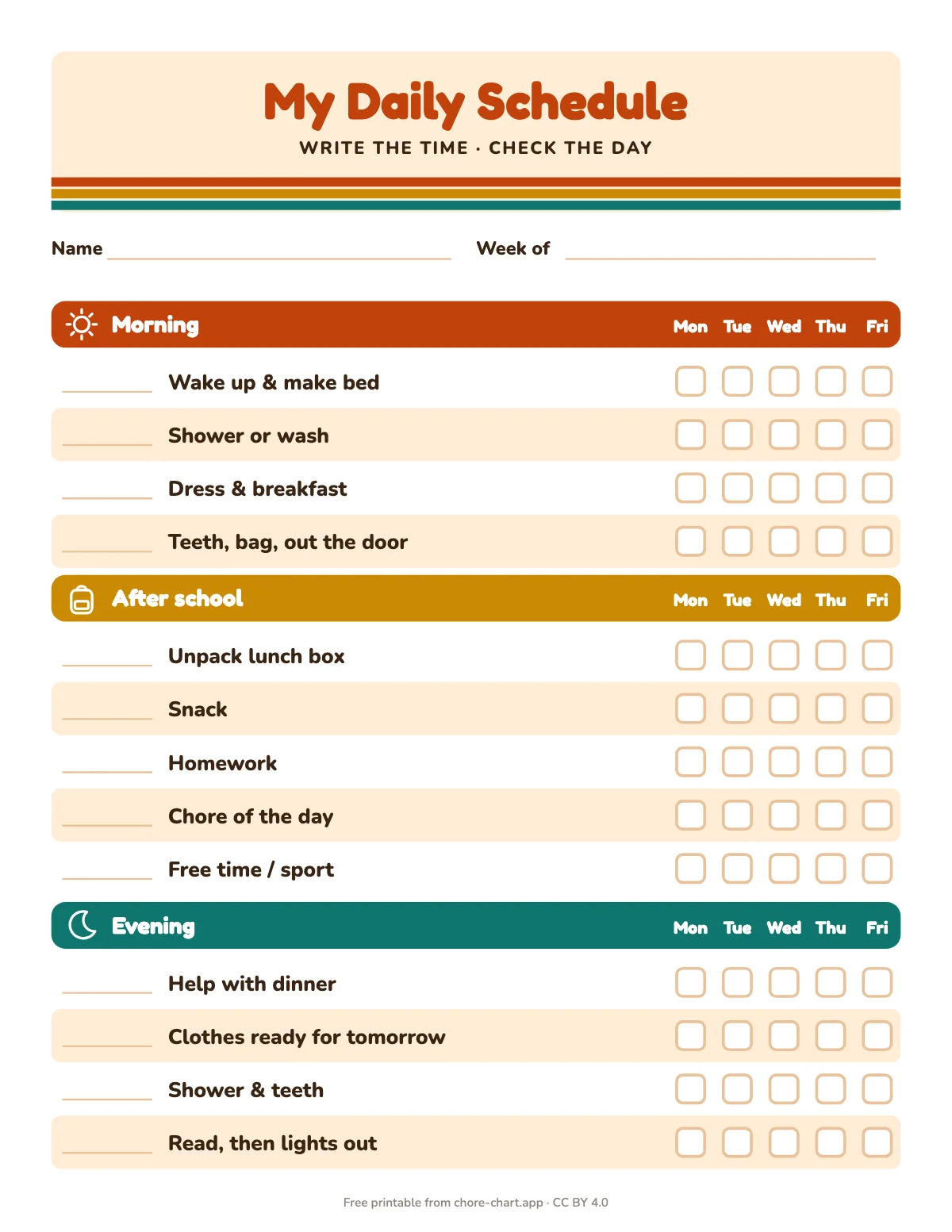
Early readers can manage a picture plus two or three words. Five to seven jobs is plenty, checked once a day, with a reward at the end of the week. This is also the age when routines start to run without you: the numbered morning chart has a time box on each step, so "shoes on by 7:45" becomes something they can check themselves. The after-school chart covers only school days on purpose.
Ages 8–10: real jobs and points
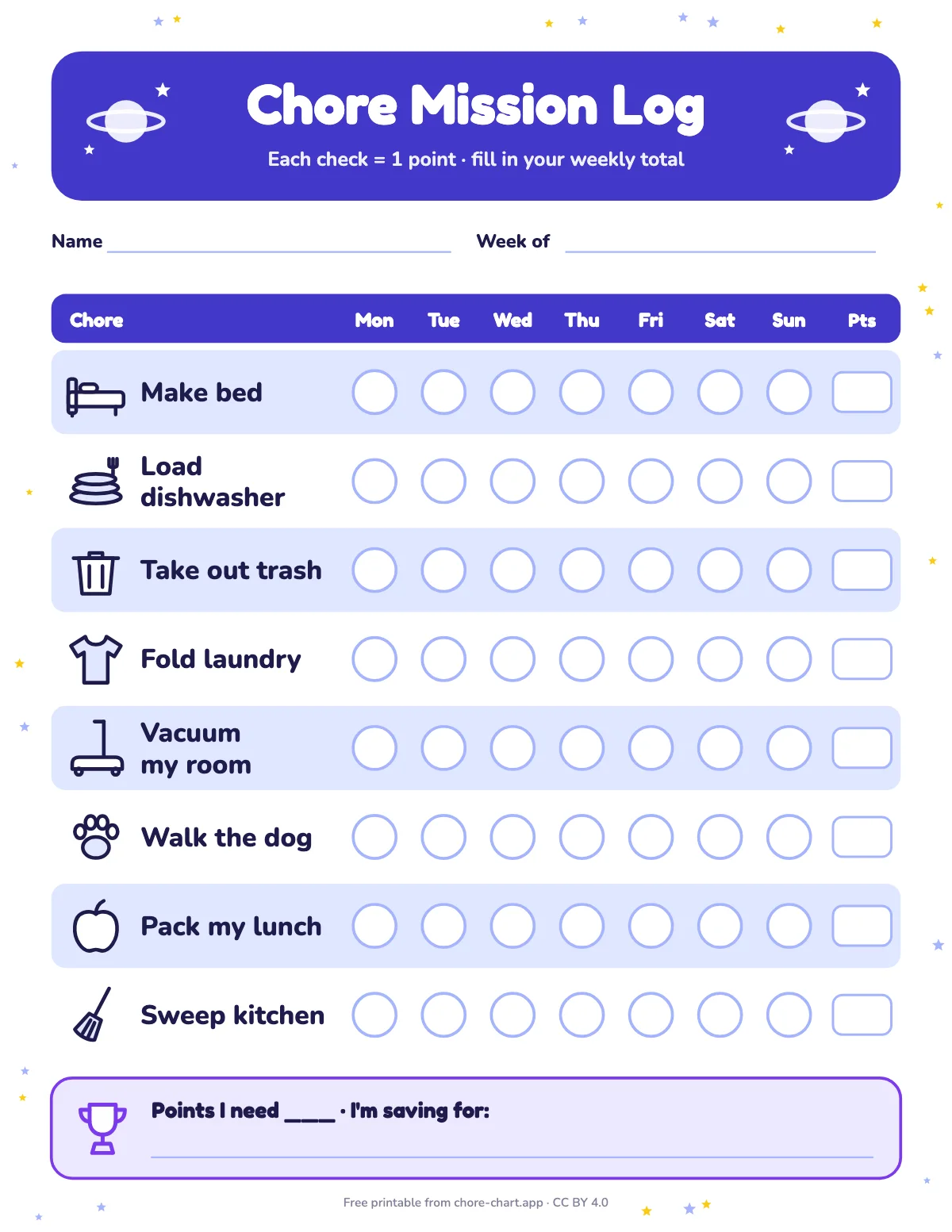
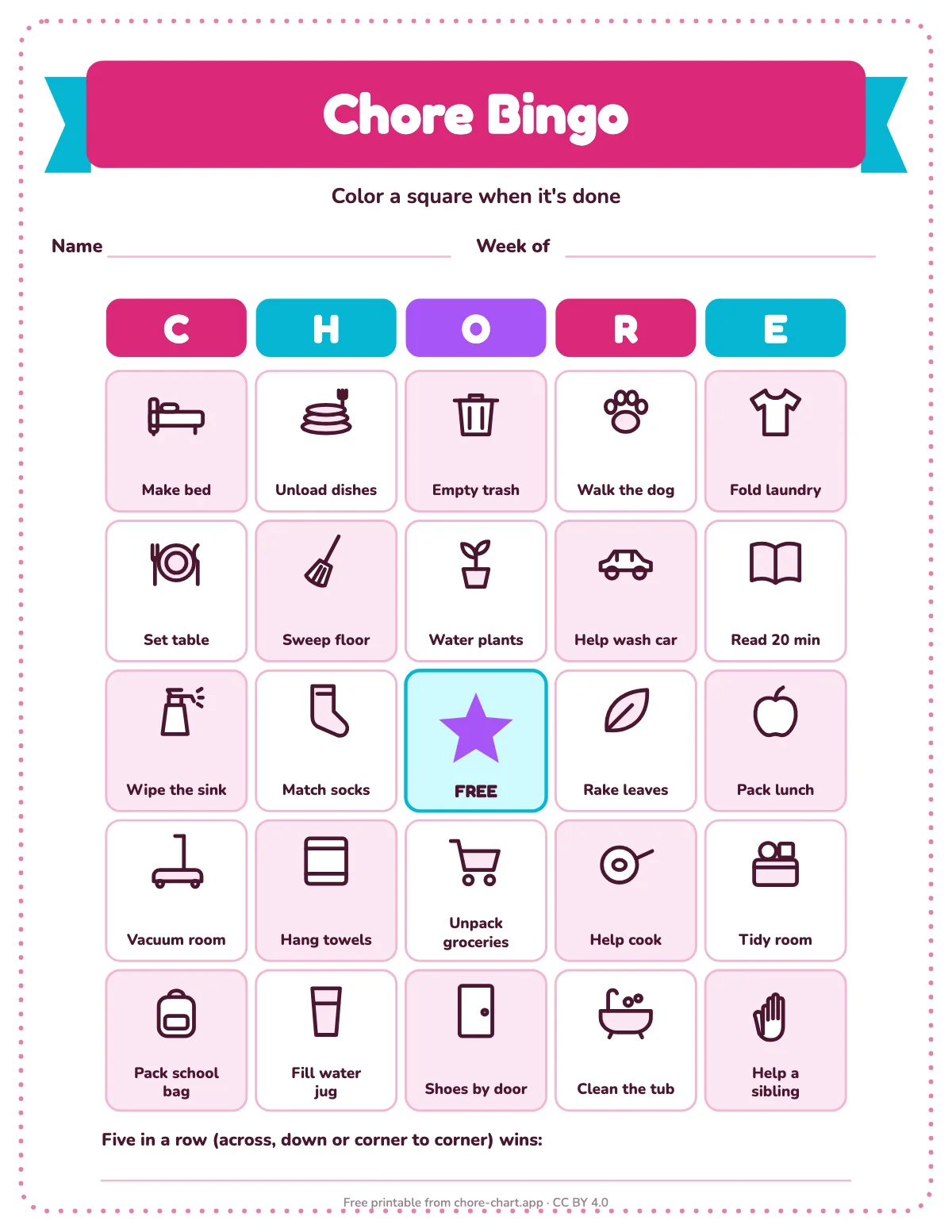
By eight, most kids can do jobs that actually help the household: load the dishwasher, take out the trash, fold laundry. Points let you weight them, so walking the dog can be worth more than making a bed. Bingo adds the variety this age asks for: any five in a row wins. The daily schedule teaches the next skill, planning time, with a blank time column they fill in themselves.
Ages 11–13: fewer, bigger responsibilities
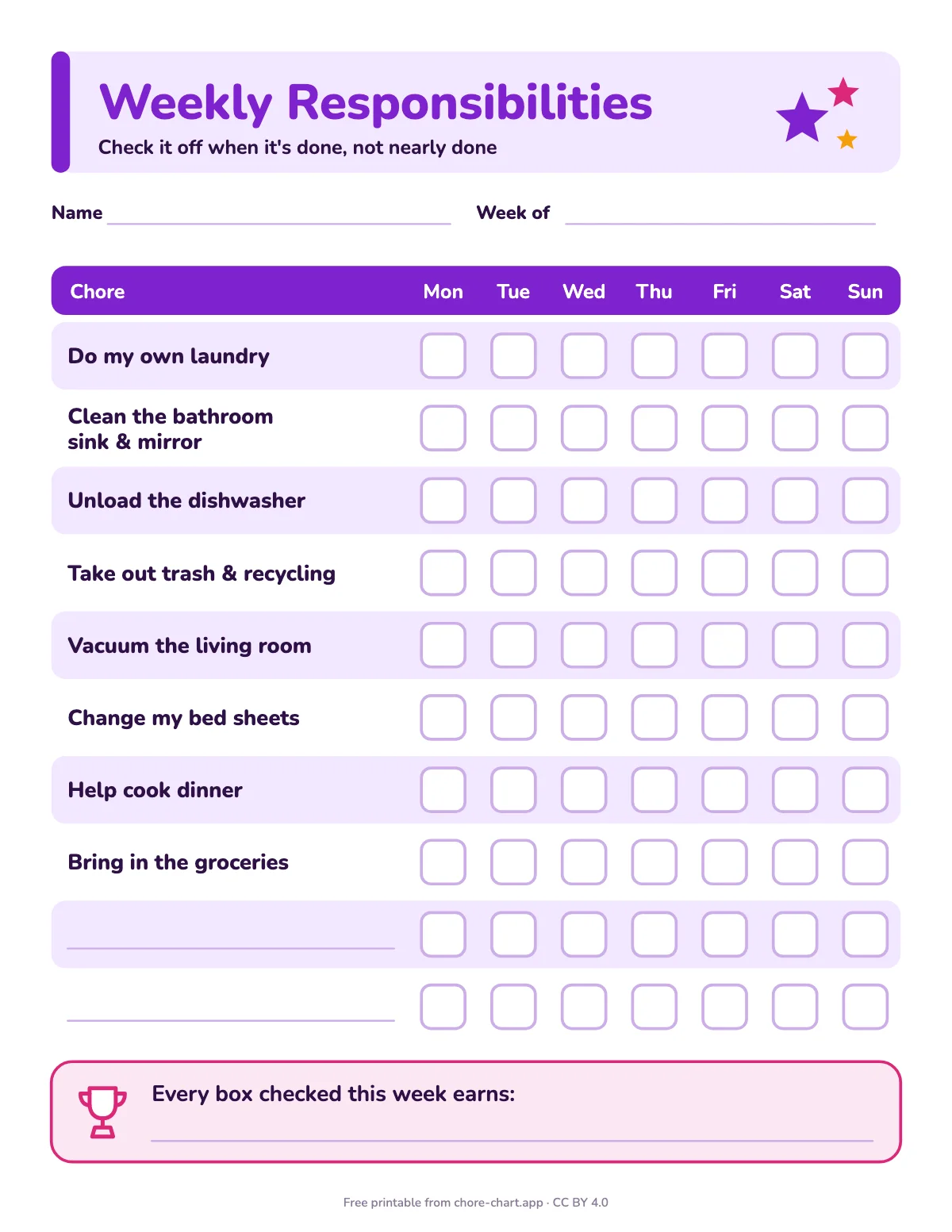
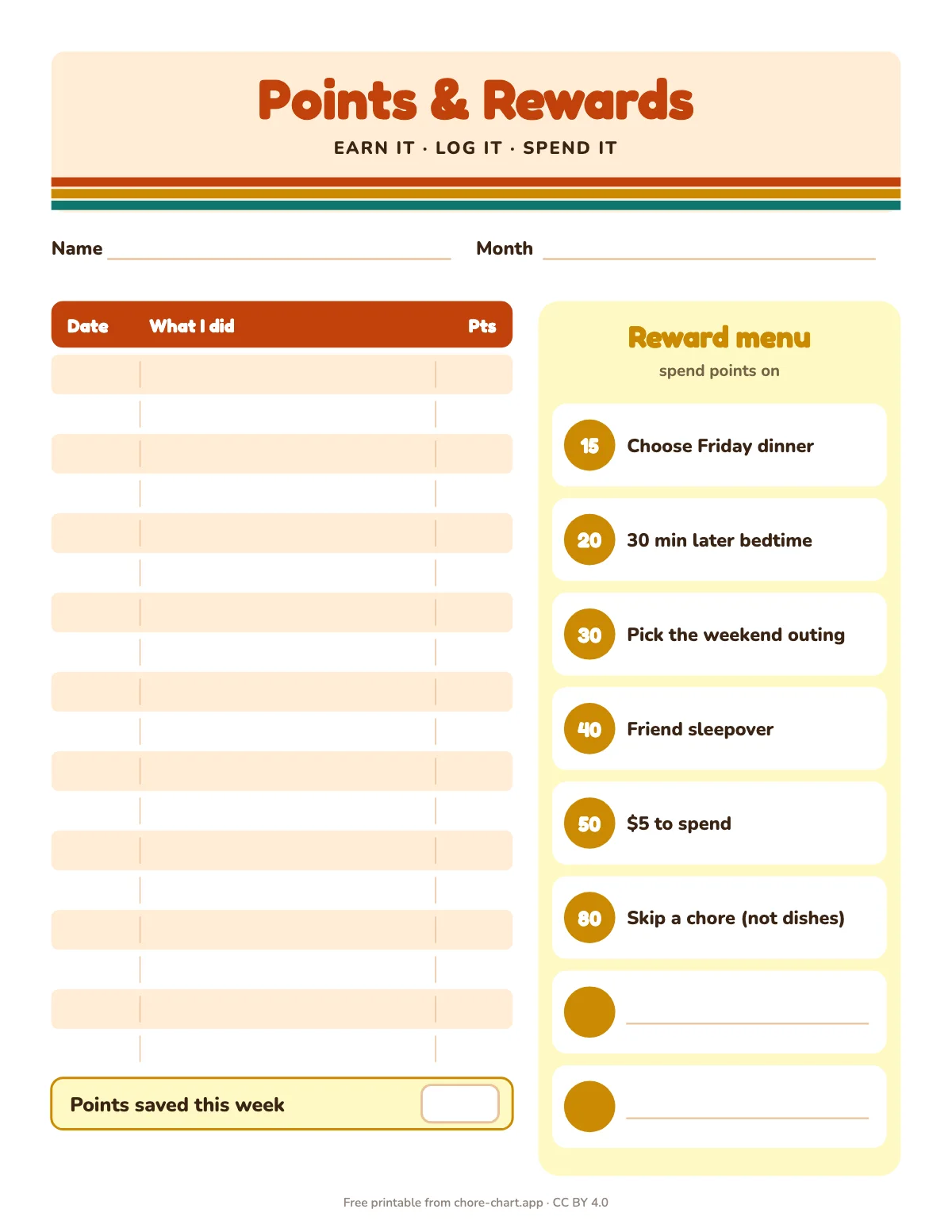
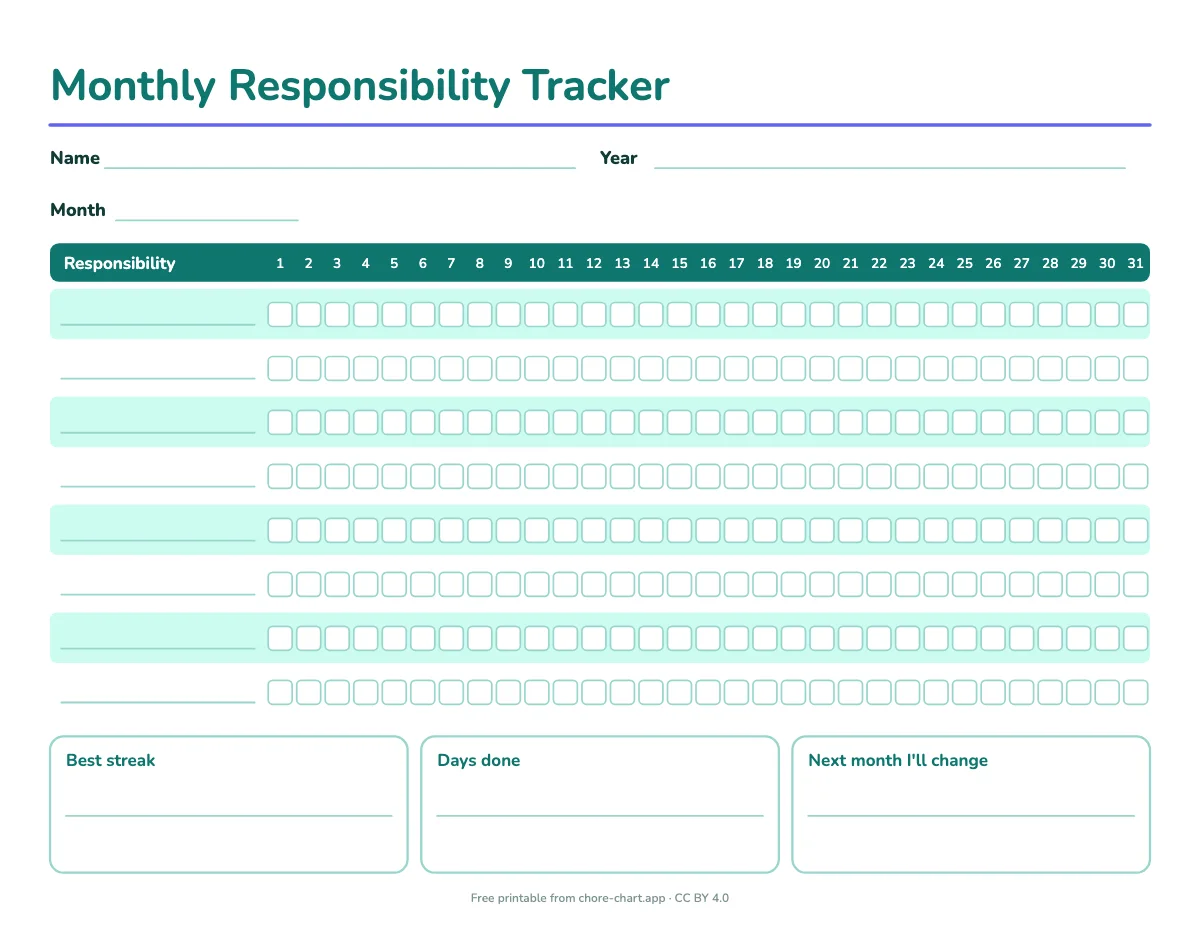
Tweens push back on anything that looks childish, so these designs are plainer and leave blank rows for jobs they choose. Swap daily stickers for points they can spend from a menu, and let them keep their own monthly tracker for habits like practice or reading.
Teens: agreements, deadlines and money
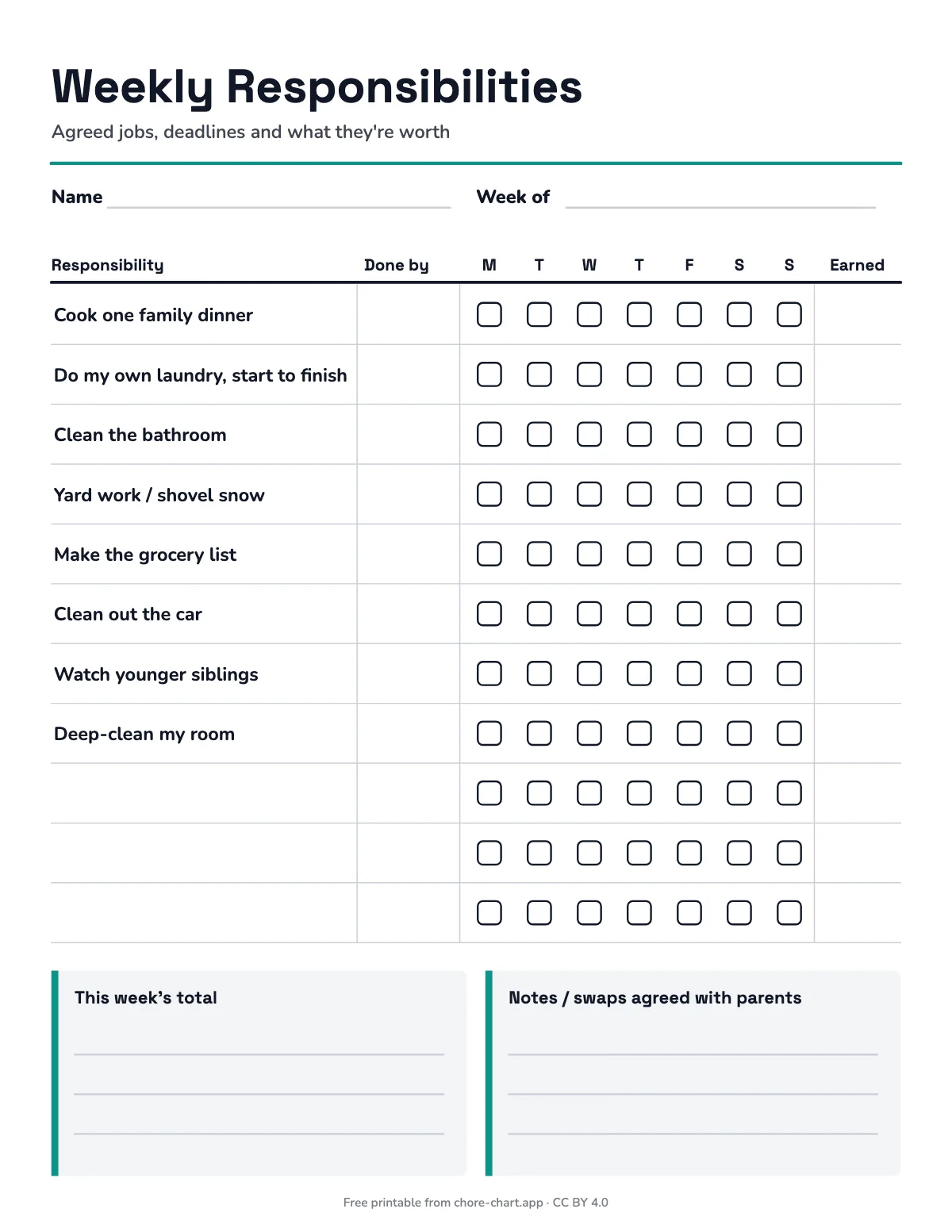
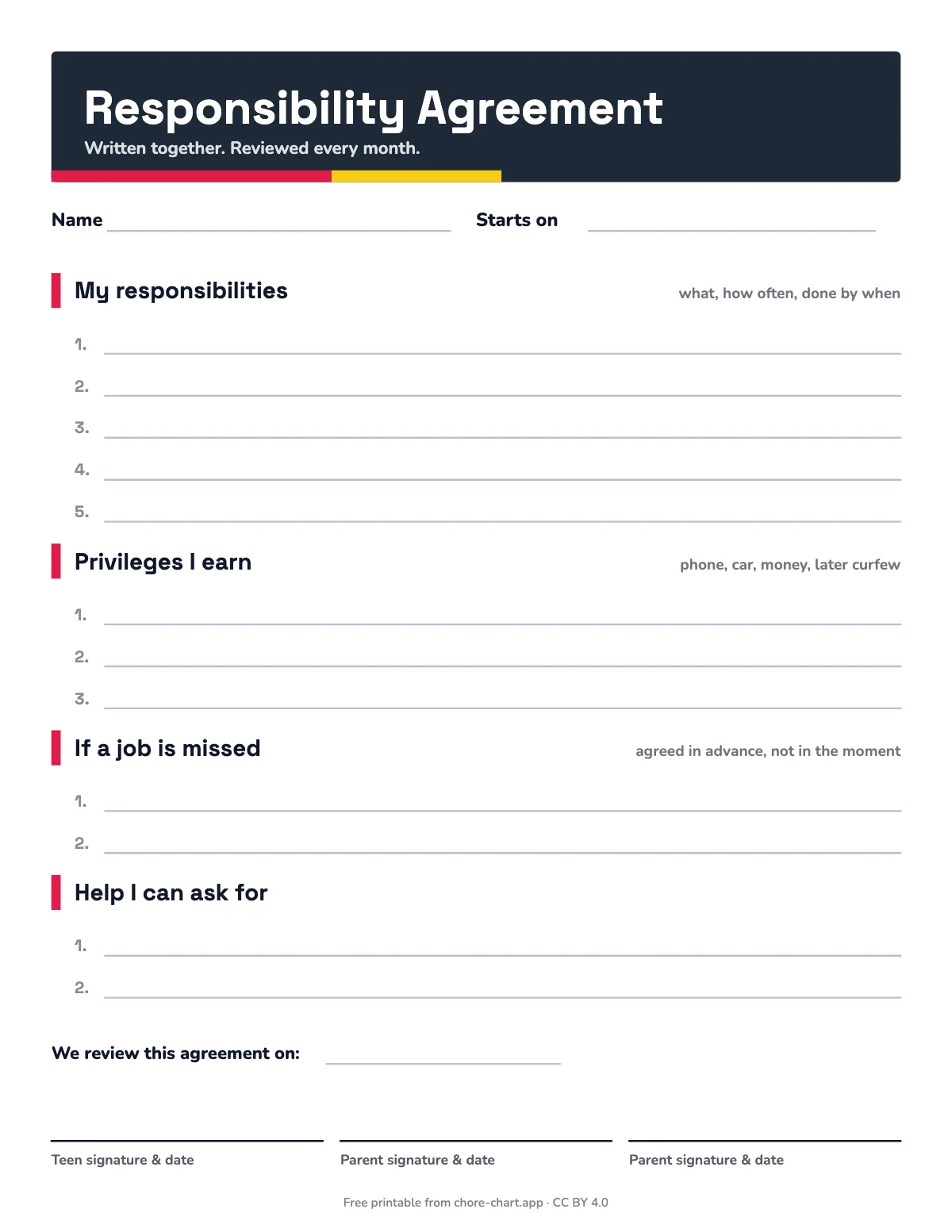
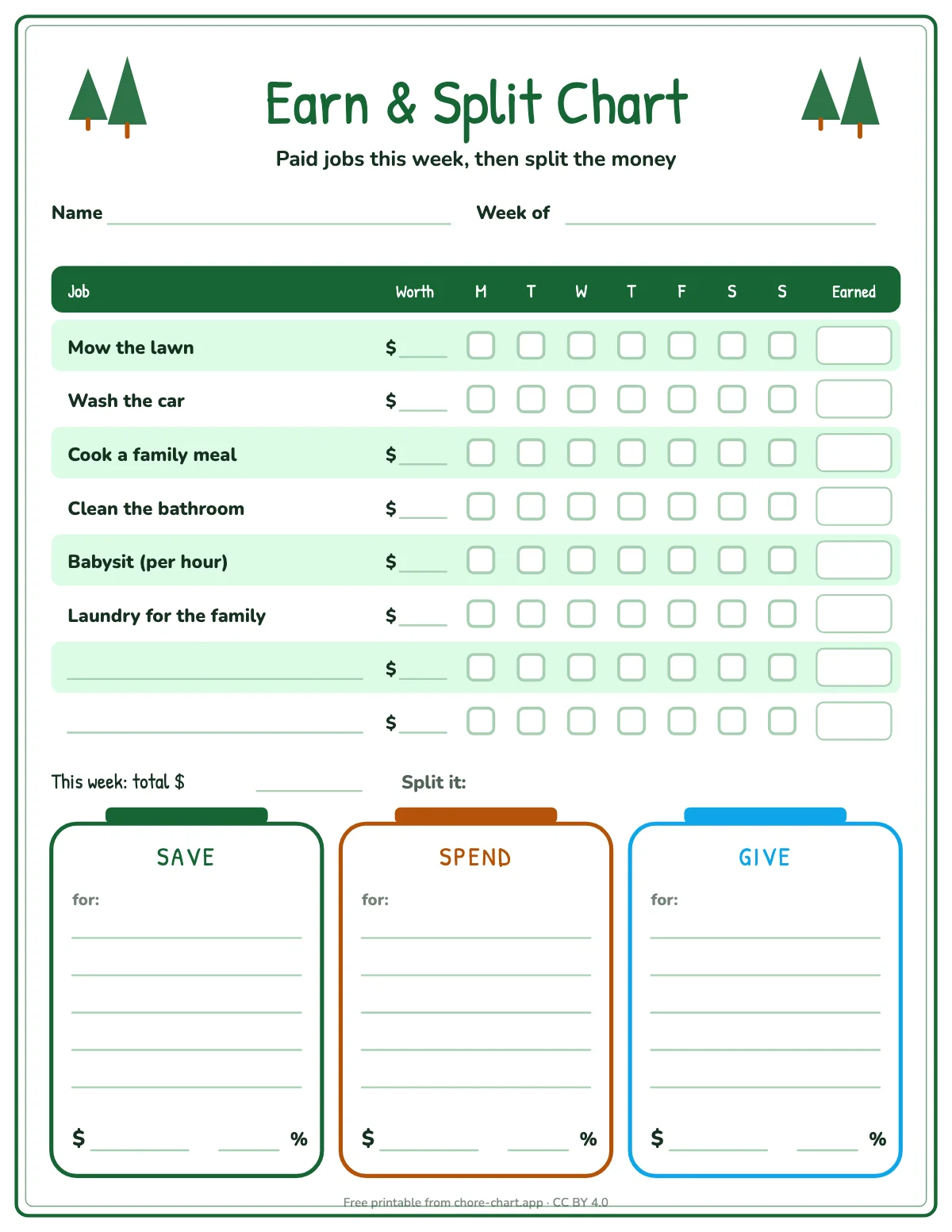
For teenagers the chart becomes a planner. Instead of a daily check there is a deadline ("bathroom clean by Saturday noon"), and the deal is written down together: what they do, what they earn, what happens if a job is missed. The allowance chart puts a dollar value on extra jobs and splits the week's money into save, spend and give.
All charts are free under CC BY 4.0: print, share and adapt them, crediting chore-chart.app. License details.
Age is a starting point, not a rule
Pick the chart for the skills your child has, not the number on the birthday cake. A six-year-old who reads well may like the 8–10 points chart; a ten-year-old who finds mornings hard may still need the picture routine. Two signs the chart is wrong: your child can't do a job without you every single time (too hard), or checks off everything by Tuesday and stops caring (too easy).
Siblings of different ages rarely do well on one shared chart. Give each child their own design and use a family who-does-what chart only for jobs everyone shares.
If you are still deciding which jobs fit which age, Family Checklist has a full list of chores by age, from 6 to 14. Pick three from the list, then come back for the chart.
Questions
At what age can a child use a chore chart?
Around 2 to 3, as soon as they can match a picture to a one-step job like putting toys in a box. Before that, do the job together and skip the chart.
How many chores for each age?
Ages 2–4: three to six tiny jobs. Ages 5–7: five to seven. Ages 8–10: six to eight, some of them real household jobs. Tweens and teens: fewer but bigger responsibilities with deadlines.
Should each child have a different chart?
Yes, when ages differ by more than two or three years. Shared family jobs can go on one who-does-what chart.
More printable charts